
Meicifang (美次方)
Inside L’Oréal’s China Investment Arm.

While I focused on some more personal pieces about fashion brands over the past few weeks, I wanted to write something more analytical this time.
Late last year, when L’Oréal took a minority stake in the Chinese skincare brand LAN (兰), I took note. I had previously written about global beauty groups investing in Chinese brands, and the deal made me curious to examine the trend from a more holistic perspective.
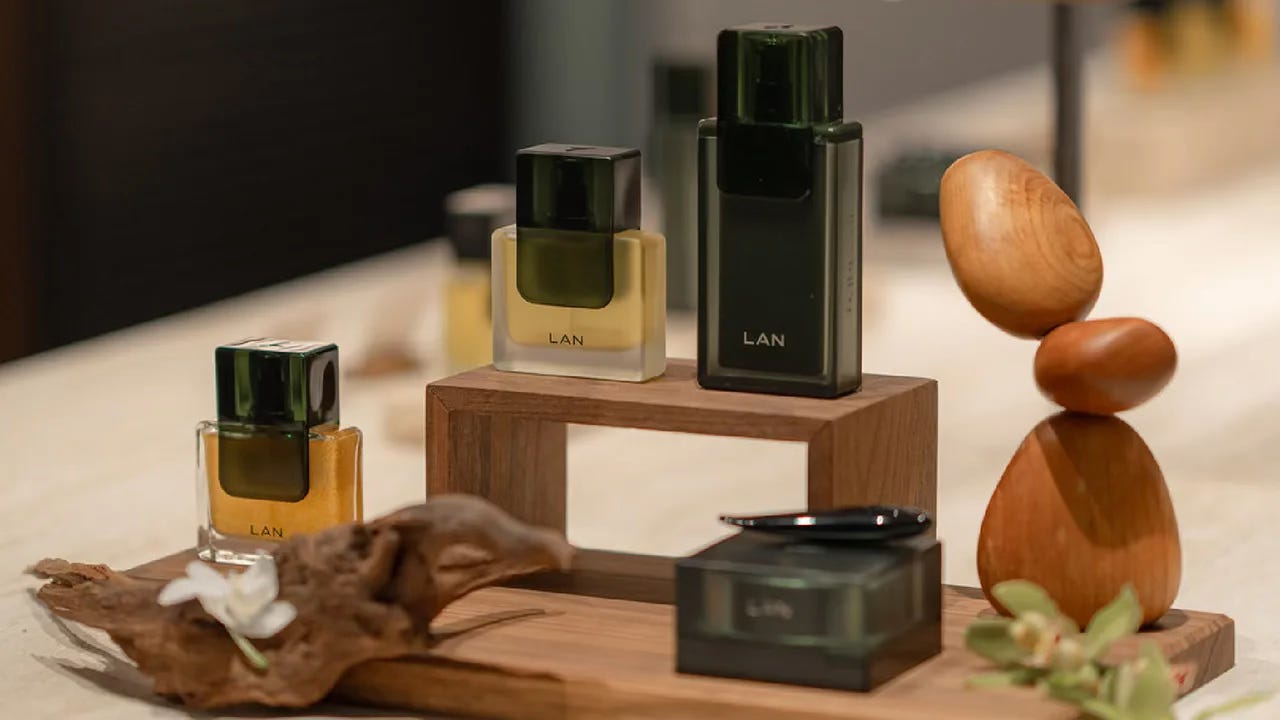
The investment was executed through Shanghai Meicifang Investment Co., Ltd. (美次方)—L’Oréal’s China-based investment arm—with additional backing from BOLD (Business Opportunities for L’Oréal Development), the group’s global strategic venture arm.
That structure matters, because Meicifang isn’t a one-off corporate venturing experiment. It’s a system. A deliberate architecture built in May 2022 as L’Oréal’s first single-market investment company outside its headquarters region. Not a regional office. Not a scouting team. An investment engine.
And the pattern of its bets reveals something more interesting than any individual brand: L’Oréal no longer views China primarily as a growth market. Increasingly, it treats the country as a source of future global innovation.
Why Build a China-Specific Investment Arm?
The answer lies in how dramatically the Chinese beauty market has evolved over the past five years.
For two decades, multinational brands scaled in China by exporting prestige. But that model began to erode in the early 2020s.
Three structural shifts reshaped the landscape:
Domestic brands accelerated faster than incumbents.
Chinese beauty companies iterated rapidly, surfacing new ingredients, routines, and storytelling formats at platform speed.Platform-native marketing outpaced traditional playbooks.
Livestream commerce, private traffic ecosystems, and hyper-localised community building rewarded agility over global brand consistency.Cultural confidence deepened.
The rise of guochao moved beyond aesthetics into a broader appetite for locally rooted narratives and ingredients.
By late 2025, even mainstream financial reporting framed L’Oréal’s minority investments in Chinese brands as a pragmatic response to slowing growth and intensifying domestic competition. Rather than competing solely through its own brands, L’Oréal began buying proximity.
Meicifang institutionalises that proximity.
It allows L’Oréal to invest like a local player—through minority stakes, flexible deal structures, and long-term partnerships—while still connecting those bets to global scale via BOLD.
How Meicifang Works: Local Speed, Global Leverage
Public disclosures around several deals explicitly state that investments are made via Meicifang “with support from BOLD.” That phrasing is revealing.
Meicifang operates as a localised node within L’Oréal’s global innovation ecosystem:
Local sourcing of deals
Minority equity positions
Partnership structures rather than full acquisitions
Strategic integration where relevant (R&D, distribution, supply chain)
The model echoes L’Oréal’s broader open-innovation posture in China, including its BIG BANG beauty tech challenge, which cultivates startup pipelines across biotech, sustainability, retail tech, and digital commerce.
In effect, Meicifang sits at the intersection of three layers:
Cultural intelligence (brands)
Scientific infrastructure (biotech, ingredients)
Commercial infrastructure (retail, manufacturing, sustainability)
And the pattern of its deals reflects this three-part thesis.
Phase One: Fragrance as Cultural IP
If you want to understand Meicifang’s mindset, start with where it began: fragrance.
China’s fragrance market has shifted from a niche category into a strategic growth engine. Once accounting for only a tiny fraction of global perfume sales, it is now among the fastest-growing segments in Chinese beauty.
According to GlobeNewswire, China’s fragrance market was valued at roughly $1.24 billion in 2024 and is expected to more than double to $3.02 billion by 2030, expanding at a 7.5% CAGR, outpacing the growth of China’s overall beauty sector.
Meicifang’s early brand investments map directly onto this shift.
Documents (闻献): The Avant-Garde Signal
One of the earliest widely reported investments was in Documents (闻献), the Beijing-founded fragrance house known for its Zen-inflected aesthetic and high-end positioning.
Documents does not compete on mass accessibility. Instead, it operates in the conceptual, gallery-like niche fragrance space—elevating traditional Chinese ingredients such as mugwort, star anise, and magnolia into premium compositions.
Strategically, this wasn’t a volume bet. It was a meaning bet.
By backing Documents, L’Oréal gained:
Access to culturally embedded storytelling
Insight into high-end Chinese fragrance positioning
A foothold in China-native olfactory identity


To Summer (观夏): Affordable Niche, Scalable Emotion
In February 2024, L’Oréal announced a minority investment in To Summer (观夏) via Meicifang, again supported by BOLD.
To Summer occupies what might be described as “affordable niche.” Boutique-led, aesthetically refined, and culturally coded—but priced below Western luxury fragrance houses.
Its stores double as experiential spaces; limited editions tied to traditional festivals frequently sell out; and gifting culture drives repeat purchases. The brand is platform-native and culturally literate.
For L’Oréal, the investment achieves several objectives:
Participation in China’s fragrance premiumisation wave
Exposure to experiential retail formats tailored to local consumers
A potentially exportable brand with a distinctly Eastern identity


Phase Two: Moving Upstream — Focus on Science
Fragrance investments capture cultural optionality. But Meicifang’s second wave signals something more structural: upstream control.
Shinehigh Innovation: Ingredient Infrastructure
In 2023, L’Oréal publicly confirmed an investment in Shinehigh Innovation, explicitly referencing Meicifang’s strategic role.
The move marked a shift from consumer-facing brands to scientific capability.
China’s beauty market has become intensely ingredient-literate. Actives trend rapidly—niacinamide, peptides, and novel botanical extracts.
Investing upstream reduces dependence on external suppliers while shortening innovation cycles.
Veminsyn (未名拾光): Biotech and Low-Carbon Manufacturing
In May 2025, L’Oréal took a minority stake in biotech company Veminsyn (未名拾光), entering a strategic partnership to co-develop innovative bioactive ingredients with an emphasis on lower-carbon biomanufacturing.
The move signals three priorities:
Securing differentiated bioactives
Accelerating formulation pipelines
Aligning with sustainability expectations
At a time when domestic brands rapidly launch ingredient-driven products, controlling the upstream layer becomes both defensive and offensive.
Phase Three: The Mass-Market Wedge
After premium fragrance and biotech capability, the portfolio expanded into mass skincare.
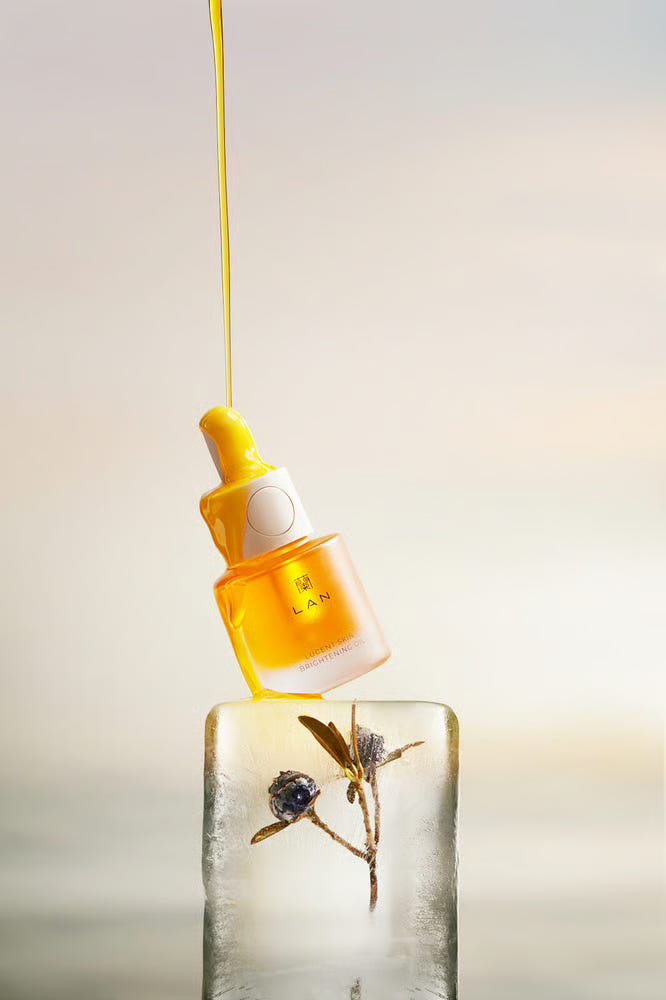
The minority investment in LAN (兰) in late 2025 reflects a different form of optionality: channel and price-band reach.
Domestic skincare brands hold structural advantages in:
Lower-tier city penetration
Platform-native pricing strategies
Rapid ingredient iteration
High-frequency product drops
For L’Oréal, minority stakes in this segment accomplish something delicate: participation in mid-market growth without destabilising its prestige architecture.
Parallel disclosures also revealed L’Oréal’s earlier 6.67 percent stake in Chando, identified through IPO materials—another signal that minority equity exposure to domestic skincare is becoming a deliberate pattern rather than opportunistic experimentation.
The implication is clear. Meicifang is not building a portfolio of trophy niche brands alone. It is constructing layered exposure across premium, upstream, and mass.
The Four Forms of Optionality
Viewed collectively, Meicifang’s portfolio can be understood as purchasing four distinct forms of optionality:
Cultural Optionality
Investments in Documents and To Summer provide proximity to Chinese premium narratives that global conglomerates cannot authentically manufacture.
Innovation Optionality
Shinehigh and Veminsyn secure access to ingredient pipelines and manufacturing capabilities that compress innovation timelines.
Channel Optionality
LAN and similar investments unlock distribution insight and operational intelligence in segments where domestic brands dominate.
Portfolio Optionality
Minority stakes preserve future acquisition pathways while simultaneously preventing competitors from consolidating promising local assets too early
Competitive Context: The Broader Incumbent Shift
L’Oréal is not alone in backing Chinese brands, particularly in fragrance. Global beauty groups increasingly recognise that China’s scent boom may produce internationally viable brands.
But Meicifang stands out for one key reason: institutionalisation.
Rather than making episodic strategic investments, L’Oréal has built a permanent China-specific investment vehicle. That signals long-term commitment.
It also suggests something more subtle: China is no longer merely a revenue line for global beauty groups—it is an innovation laboratory.
What Comes Next?
If the current logic holds, the next wave of Meicifang investments will likely cluster around:
Clinical dermatology-led skincare brands with strong ingredient credibility
Functional makeup positioned around complexion and hybrid skincare benefits
Beauty infrastructure startups (packaging tech, fulfillment optimisation, carbon-tracking systems)
Creator-commerce tooling that formalises influencer-driven sales channels
In each case, the strategic lens remains consistent: securing early-stage proximity to where value is forming.
Thanks for this very interesting analysis! It will be interesting to see whether one day we will discover these Chinese skincare brands present in European markets - following the pattern of Japanese and Korean skincare brands.