
Studio Nicholson
How a clear design and pricing vision turned a modular brand into a 15-year success story.

A couple of years ago, I tried on a pair of wide Studio Nicholson jeans at a 2nd Street store in Osaka. It was the last day of my trip; I had obviously overspent and—after running through my mental checklist of wardrobe logic—I didn’t buy them. Still, they checked every box: design, compatibility with my wardrobe, durability, and price. I didn’t buy them, but I knew I’d regret it. And I still do.
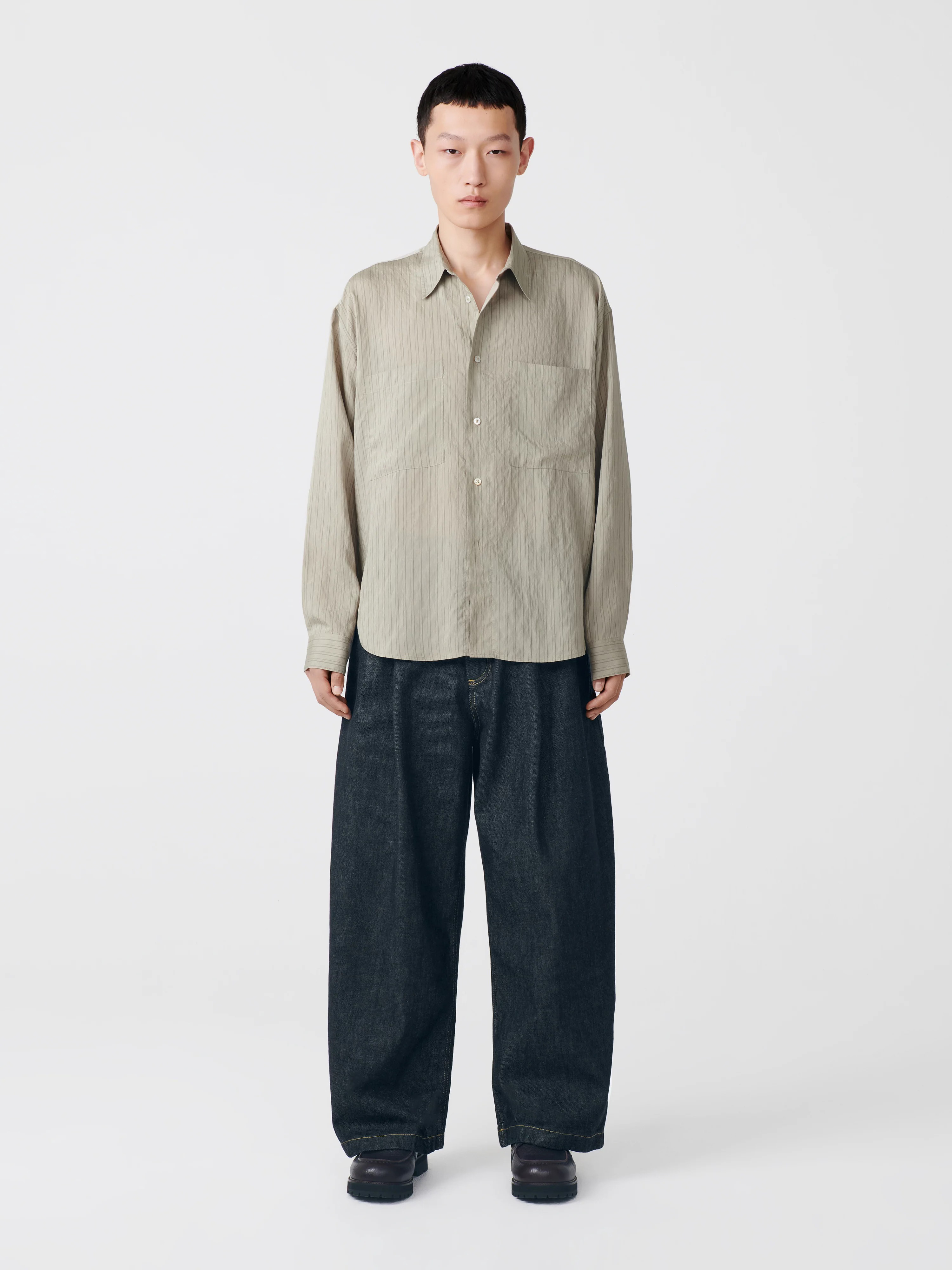
That moment became my quiet entry point into the Studio Nicholson universe. I began tracking collections more closely, absorbing styling references, and eventually adding pieces to my wardrobe. Over time, what began as aesthetic admiration for Studio Nicholson’s silhouettes gradually evolved into a deeper appreciation for the system behind the style—a brand that doesn’t just design well, but thinks commercially, operationally, and strategically.
From Shoreditch to the World: A Slow-Burn Success Story
The past fifteen years have seen the label grow from a small East London studio into an international network of flagship stores in London and Tokyo, and being stocked at more than 250 retailers globally. This growth has not been driven by marketing activations or celebrity endorsements, but by a steady accumulation of trust among customers who return season after season for pieces that never date.
For founder Nick Wakeman, "quiet success" is not an accidental outcome—it’s the business model. "The minute you chase hype, you lose the very thing that brought people to you," she has said in interviews. That restraint has proved prescient in an industry where "less but better" is not just a design principle but a survival strategy.

But Studio Nicholson’s path was not a straight upward trajectory. By 2013, just three years in, the company faced severe financial and staffing challenges. Without a breakthrough, the brand risked folding. That turning point came in Paris, where Wakeman presented her collection to a handful of buyers. Orders surged.
This wasn’t luck so much as product-market fit. Buyers responded to a brand that had a clear vision and a point of difference: a modular wardrobe built on uncompromising fabrics and architectural silhouettes. In the years since, Studio Nicholson has weathered industry downturns and retail contractions with the same formula—clarity, consistency, and adaptability without compromise.
The Modular Wardrobe: Studio Nicholson’s Commercial and Creative Engine
The modular wardrobe strategy operates on a deceptively simple premise: build a compact library of signature garments—the double-pleated Line Pant, the high-waisted Sorte Pant, the minimally detailed Seth Jacket, the boxy Sandos Knit—and reissue them each season with subtle updates in fabric or proportion. Each piece is designed to integrate seamlessly with past and future purchases.


Customer Loyalty – New pieces integrate with old ones, making each purchase an additive investment.
Sustainability by Design – Compatibility extends garment lifespan, reducing seasonal waste.
Inventory Efficiency – Continuity products allow more predictable forecasting and lower risk.
In other words, customers aren’t just buying a pair of trousers—they’re buying into a wardrobe architecture. Wakeman has described it as “building blocks for living,” but in retail terms, it’s also a highly defendable moat.
Fabric-First: The Understated Luxury
In a market where “premium fabric” is often a tagline, Studio Nicholson’s textile obsession is operational reality. Wakeman was well-connected before founding the label—she had access to the same mills that supplied fabrics for Phoebe Philo’s Celine, and a clear vision to translate those materials into garments that felt both elevated and wearable.
This resulted in a global sourcing map:
Luxury Korean cotton for crisp shirting
Scottish merino for knitwear
Japanese twill for trousers
Italian peached cotton for soft, brushed handfeel pieces
The core idea is simple: match each fabric to its purpose. In-store, materials are not just displayed—they’re explained. Staff, including those at retail partners, are carefully trained each season to articulate the why behind every textile choice. It makes touch part of the brand narrative. The effect is subtle but lasting: customers walk away with the sense that these clothes are built with intent—and built to last.


Pricing as an Editorial Decision
Besides the quality of the garments, the pricing is spot on—substantially lower than other quiet luxury players without compromising design or materials.
In an era of inflated price tags and diminishing quality (think of the many brands quietly substituting synthetics to cut costs—I recently saw a pair of Margiela slacks retailing for €800 that contained only 40% wool and 60% polyester), Studio Nicholson’s pricing strategy feels not only honest, but editorial. It reflects a belief that timeless design and material integrity should be accessible—not cheap, but fair. And crucially, consistent. It’s a pricing logic that invites collection rather than one-off consumption.
The quiet luxury space is increasingly crowded, but Studio Nicholson’s positioning is unusually distinct:
The Row sells an unattainable dream, price-gated from the majority and approximately three times more expensive than Studio Nicholson.
Lemaire trades in cultural capital, especially in Asia. It has cultivated a loyal following. Many Lemaire customers (myself included) are also Studio Nicholson customers, but the latter is priced 20–30% lower.
Jil Sander and other luxury houses offer similarly timeless design and high-quality production, yet Studio Nicholson costs about half as much.
In a category where pricing has become decoupled from quality, Studio Nicholson’s consistency becomes a form of brand equity. It invites not just purchase, but participation in a design system—a wardrobe you grow with, not out of.
Collaborations as Controlled Disruption
Studio Nicholson tends to steer clear of gimmicks, but it has used collaborations thoughtfully—as a way to add freshness without losing its core identity. The Paraboot partnership, for example, merged two heritage-driven brands into a product that felt inevitable, not opportunistic. The same goes for its collaboration with Japanese bag maker Porter Yoshida.
Even the Zara collaboration didn’t feel like a cash grab (even if it probably was). Long-time readers know I’m not the biggest fan of small brands teaming up with fast fashion giants. But I’d also be the first to take the opportunity if offered. Take Uniqlo U (Christophe Lemaire’s collection) as an example. These collaborations allow small brands to scale sustainably while reaching a new audience who might later become loyal customers.
The key is alignment: partnerships are selected for shared emphasis on longevity and function—not for celebrity optics or press-bait hype.
Scaling Without Noise: APAC as the Natural Testbed
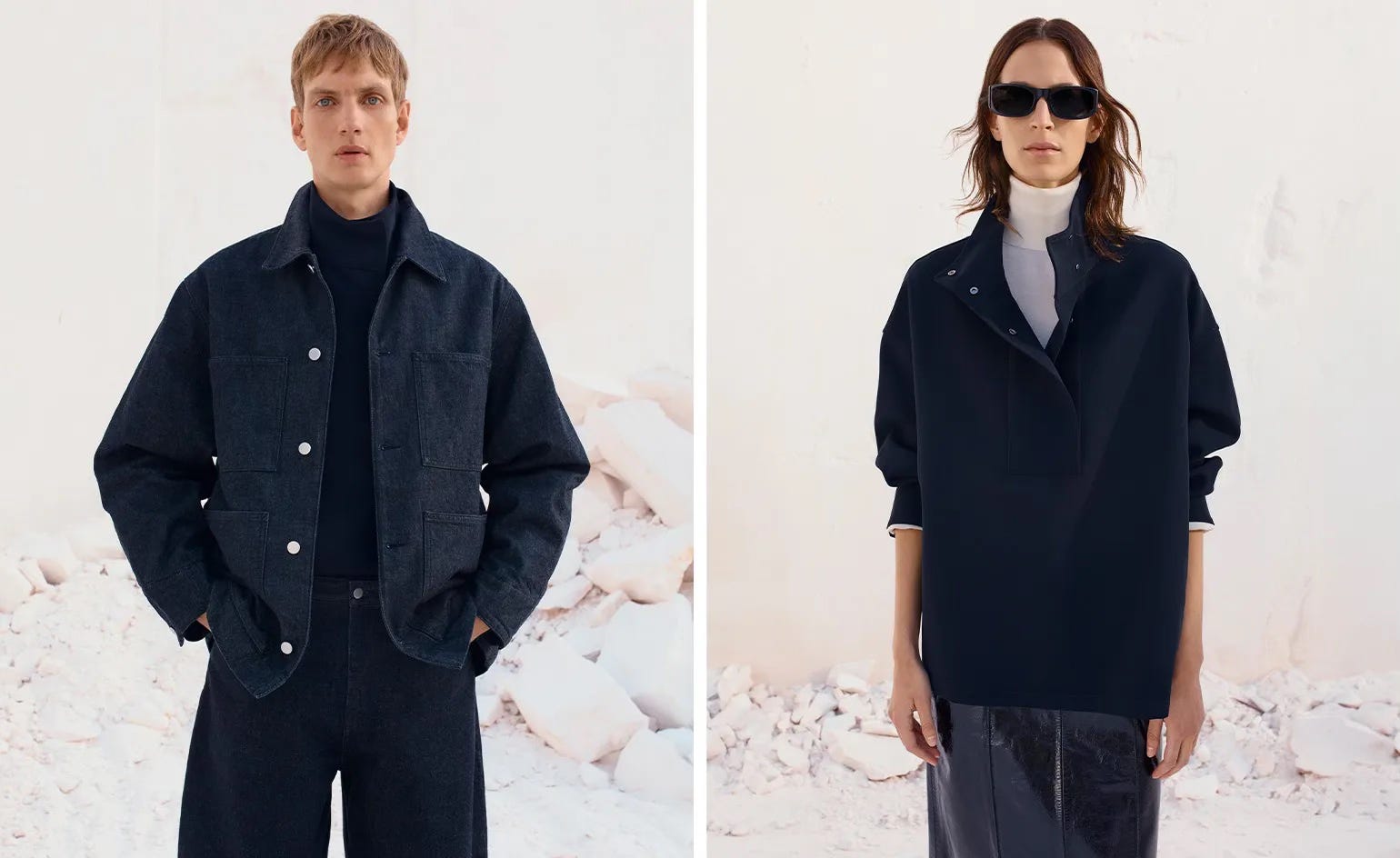
Studio Nicholson’s brick-and-mortar rollout has been surgical, each opening treated less like a retail launch and more like a controlled brand immersion. The Soho London flagship, opened in 2021, set the blueprint: minimal architecture, generous space, and fabrics given equal billing to the garments themselves.
This formula has translated seamlessly to Asia-Pacific, where the brand’s architectural minimalism and modular philosophy meet a receptive audience. In Tokyo the store adapts to local contexts while preserving the core design language, much like Lemaire’s converted residential spaces or Stòffa’s intimate SoHo atelier. The distinction? Nicholson leans harder on in-store education, turning each location into a live demonstration of how the modular wardrobe works—proportions, textures, and garment compatibility are not just displayed but staged.
The fit with APAC is cultural as much as commercial. Japan’s reverence for craftsmanship and South Korea’s appetite for discreet yet directional fashion dovetail perfectly with the brand’s values. Here, urban professionals see the modular wardrobe not as a fashion statement but as a refined solution to daily dressing—an ethos that aligns with the "fewer, better" sensibility gaining ground in the region.
With additional APAC cities like Seoul on the roadmap and a first U.S. flagship under consideration, the challenge ahead will be testing whether this system-first proposition can carry across more crowded or logo-driven markets.


Risks and the Road Ahead
Growth comes with risk. Expand too fast, and the scarcity and sharpness that define the brand could start to blur. The recent launch of a Tmall flagship brings new visibility in China—but also the challenge of translating a tactile, fabric-first experience into digital storytelling that still communicates material integrity.
E-commerce scale poses a similar tension globally. As the brand grows, it will need to find ways to make its textile narrative felt just as vividly online as in-store.
Wakeman, to her credit, seems to sense this. For 2025, she’s betting on community, not spectacle: loyalty programs, archival pop-ups, intimate store events. Not as a growth hack, but as a way to go deeper with those already paying attention.
Studio Nicholson is proof that brands don’t need to be loud to grow—just clear. Everything from pricing to product cadence to physical presence has been tuned for longevity, not a quarterly spike. Staying this focused for 15 years is rare. Doing it while quietly scaling? Even rarer.
And yes, I still think about those jeans.