
Seoul Shopping Recap
Why Seoul’s fashion retail left me underwhelmed—and what I still discovered along the way.

Two weeks ago, I spent a few days in Seoul with a carefully curated wish list in hand. But here’s my hot take: if you’re not a local, or at least fluent in navigating Naver, the in-store experience can be surprisingly underwhelming.
Most Korean brands keep their shops tightly curated, showing only the current season’s highlights. Past collections rarely surface, and the more unusual pieces you spotted online may never make it to the racks. It’s a model that prioritizes storytelling through space and edit over exhaustive availability. If you live in Seoul, it’s inspiring. If you’re a visitor, it’s limiting.
Still, that scarcity is part of the charm—and in between frustrations, I found some standout brands worth mentioning.
Amomento
An easy first mention and probably the most well-known brand is Amomento. Amomento has become something of a cult favorite among Seoul’s minimalist crowd. Known for oversized knits, clean tailoring, and a soft color palette, the brand feels like Korea’s response to contemporary quiet luxury. Their garments balance structure and ease—cropped jackets with generous shoulders, pleated trousers that drape rather than cling. The shop itself reflects this philosophy: muted interiors, thoughtful merchandising, and a sense that each piece is meant to be discovered slowly.
Founded in 2016 by designer Lee Sujin, Amomento started as a womenswear label with a strong emphasis on knitwear before expanding into full ready-to-wear collections. Its early success came from crafting pieces that felt both international and deeply Korean—an understated elegance that resonated with Seoul’s growing appetite for minimalism. Today, the brand is stocked internationally at select boutiques while maintaining a loyal domestic following.


Coor
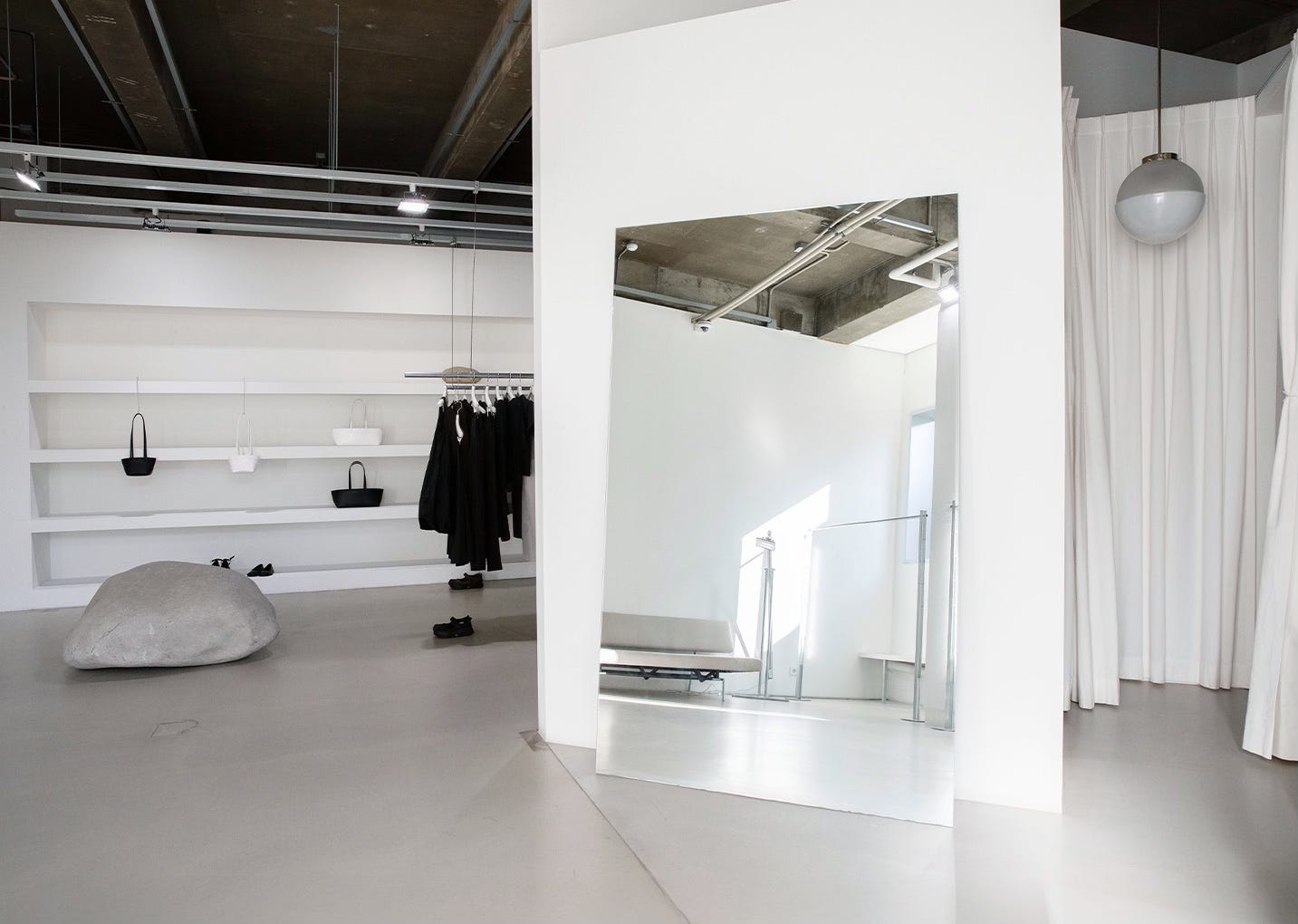
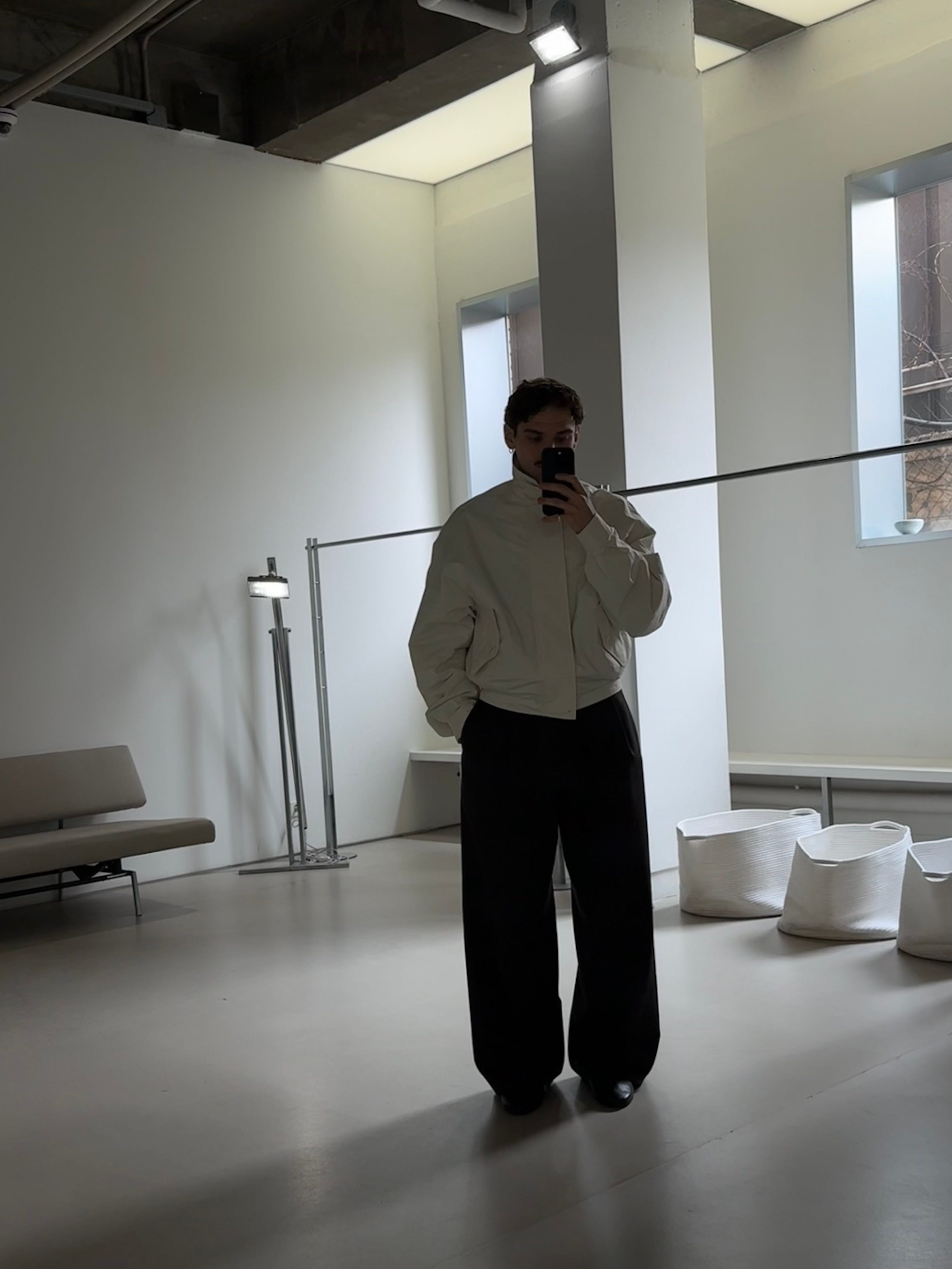
I’ve already written a full article about Coor, but it’s worth emphasizing again: few Korean labels nail everyday refinement quite like this one. Their approach is rooted in wardrobe essentials—button-downs, slouchy suiting, refined outerwear—that prioritize form and function. Their flagship store in Seongsu is impressive and features art installations. I visited just before the release of the AW2025 collection, but most pieces were already sold out in my size. A few days later, they held a presentation for the new collection, but without a Naver account, I couldn’t sign up.
Quick rant about Naver: I get it—it’s an amazing platform, but as a non-Korean speaker, it’s nearly impossible to navigate. You can of course use Google Maps in Seoul, but so many stores, restaurants, cafés, and bars aren’t listed there. Not a dealbreaker, but it makes exploring the city a bit more complicated.
Founded in 2016, Coor quickly distinguished itself by elevating everyday basics into a refined modern wardrobe. With a strong focus on tailoring and material quality, the brand gained traction among Seoul’s design-conscious urbanites who wanted sharp but wearable pieces. Coor’s consistent identity has helped it carve out space both in Korea and abroad, where it’s increasingly stocked in concept stores aligned with the quiet-luxury aesthetic.


Insilence
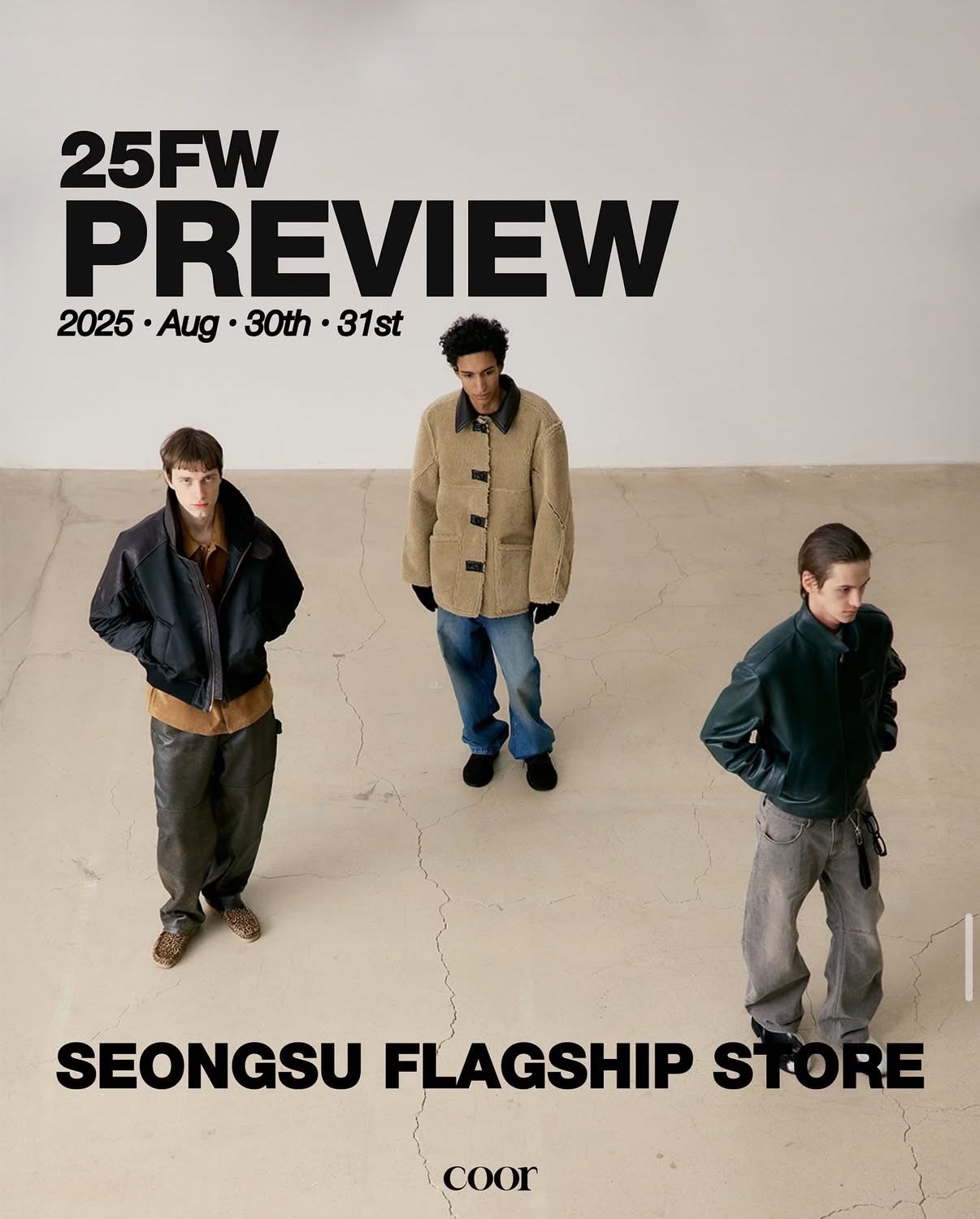
Insilence was a brand I’d only encountered online, represented by Ideal People, a PR agency I’ve followed for a while. Seeing it in person confirmed its identity is firmly anchored in scale and proportion: voluminous outerwear, dramatic shoulders, elongated lines that reshape the body.
Launched in 2013, Insilence emerged during Seoul’s streetwear boom but stood apart by blending that energy with a more architectural sensibility. Oversized outerwear became its signature, earning visibility in both local and international fashion circles. While still youth-oriented, Insilence has steadily expanded its categories, positioning itself as a bridge between casual streetwear and structured contemporary fashion.


BÉLIER
Honestly, the best discovery of my trip. BÉLIER is a slightly more expensive Korean brand, somewhat comparable to Amomento. I first came across one of their shirts at Hyundai Seoul and was impressed by the quality—the fabric felt very close to Our Legacy’s Beyond shirt. Unfortunately, I only realized after leaving that BÉLIER has a flagship store of its own (another Google Maps casualty).
BÉLIER sits somewhere between tailoring and casualwear, with an emphasis on refinement. The label seems intent on giving Korean consumers a vocabulary for “everyday chic”—clothing that transitions from café culture to evening events without fuss. The pieces I saw leaned toward understated suiting, sleek knits, and clean silhouettes, suggesting the brand has ambitions of positioning itself among global modern menswear players.
Founded in Seoul in the mid-2010s, BÉLIER built its reputation on sharp, minimal tailoring accessible to a younger audience. Its neutral palette and clean lines resonated with Seoul’s café-hopping creative class, establishing it as a go-to for polished but wearable looks. Its expansion into international stockists suggests BÉLIER is preparing to step onto a broader stage in contemporary menswear.


Fabrégat
Fabrégat was one of the more experimental names I encountered. Less about wardrobe staples, more about directional pieces that challenge proportions and styling conventions. Their work clearly courts a younger, more daring demographic: layered looks, asymmetry, and a play on deconstruction. I discovered Fabrégat at PRTPRT in Seongsu after spotting someone with their shopping bag on the street.
Though relatively new, Fabrégat was founded in the late 2010s with the ambition of pushing Seoul fashion further into the conceptual space. While the brand doesn’t yet have the international profile of Amomento or Coor, its approach feels closer to experimental European labels—a clear signal of Seoul’s generational appetite for the avant-garde.


San San Gear
Finally, San San Gear—a brand that occupies the intersection of techwear and urban streetwear. Functional fabrics, cargo-inspired details, and an overall utility-driven aesthetic define its collections. In many ways, San San Gear feels like a more accessible counterpart to Post Archive Faction (PAF). Where PAF operates at the conceptual end of the spectrum—producing deconstructed, almost sculptural garments that attract global hype and museum-level attention—San San Gear translates similar influences into wearable, everyday gear. Both brands share an interest in futurism and urban mobility, but San San Gear grounds its vision in functionality and price points that resonate with a broader base of Seoul’s youth culture.
Founded in 2018, San San Gear draws inspiration from Seoul’s urban infrastructure and club culture, creating garments that blur lines between functional gear and street-ready fashion. Known for its utilitarian silhouettes and technical fabrics, the brand quickly caught the attention of younger consumers who value clothing as both style and equipment. San San Gear has since expanded into accessories and outerwear, cementing its position as Korea’s rising voice in techwear.


Recap & Advice
My Seoul trip didn’t result in the overflowing shopping haul I had imagined, but it gave me a better understanding of how retail here works. Stores aren’t built to satisfy a pre-built wishlist—they’re designed as curated environments where space and scarcity are part of the narrative.
If you’re planning your own trip:
Hyundai Seoul is an excellent starting point. With multiple brands under one roof, it’s the easiest way to sample without running all over the city—and it lets you get a real feel for the cuts and fabrics that define Korean design, something you simply can’t judge from Instagram or e-commerce images.
Learn to use Naver (or bring a local friend). Many events, addresses, and even basic store information never appear on Google Maps. Flagships will sometimes have no visible pin at all, while pop-up exhibitions or collection launches are often only announced and managed through Naver. For a local, this is seamless; for a visitor, it creates an extra layer of friction that can make the city feel closed off. Without Naver, you risk missing entire presentations, hidden boutiques, or time-sensitive events that define Seoul’s retail scene.
Expect the unexpected. You probably won’t find everything you’ve bookmarked online—but you will discover brands and ideas that don’t translate digitally. Right now, Seongsu is where much of the action is: many brands are staging pop-ups there, and simply walking the neighborhood’s streets can be more rewarding than hunting down specific stores. One trick I found surprisingly useful? Pay attention to the shopping bags carried by people whose style you admire—you’ll often spot labels you might otherwise have missed.
Multi-brand stores like Beaker, EQL, and Musinsa (Hongdae) are also worth visiting. Beaker offers a sophisticated edit that places Korean designers alongside international names, while EQL and Musinsa spotlight younger, more experimental labels. Together, they provide a broader view of Seoul’s fashion ecosystem beyond single-brand flagships.
Seoul shopping is less about what you take home and more about what you uncover in the process.