
Paloma Wool
How the Barcelona-born label is redefining retail with its pop-up world tour.

A couple of years ago, while interviewing fashion designer Tíscar Espadas for my master’s thesis, she mentioned Paloma Wool as a small brand gaining traction through a global pop-up tour. Since then, the Barcelona-based label has evolved from niche darling to global cult favorite—without ever following the standard playbook.
In a retail landscape still recalibrating after pandemic disruption—store closures, DTC fatigue, and the paralysis of too much choice—Paloma Wool’s traveling retail model feels less like a gimmick and more like a quietly radical alternative. Instead of chasing attention through product drops or celebrity tie-ins, the brand built its following on intimacy: first digital, then physical.
Paloma Wool’s first pop-up took place in New York in July 2019. The most recent took place in Paris in May 2025. In between, its ongoing series—with stops in cities like London and Seoul—has reimagined the store as something more momentary: part gallery, part gathering space, part content engine. For any independent brand wondering how to scale without diluting its identity, Paloma Wool offers a thoughtful blueprint.
An Artistic Foundation, Not Just Aesthetic
Launched in 2014 by Paloma Lanna, Paloma Wool didn’t begin as a fashion brand so much as a visual dialogue. Collections were less about commerce than exploration: of photography and clothing, muses and makers, Barcelona and the world beyond.
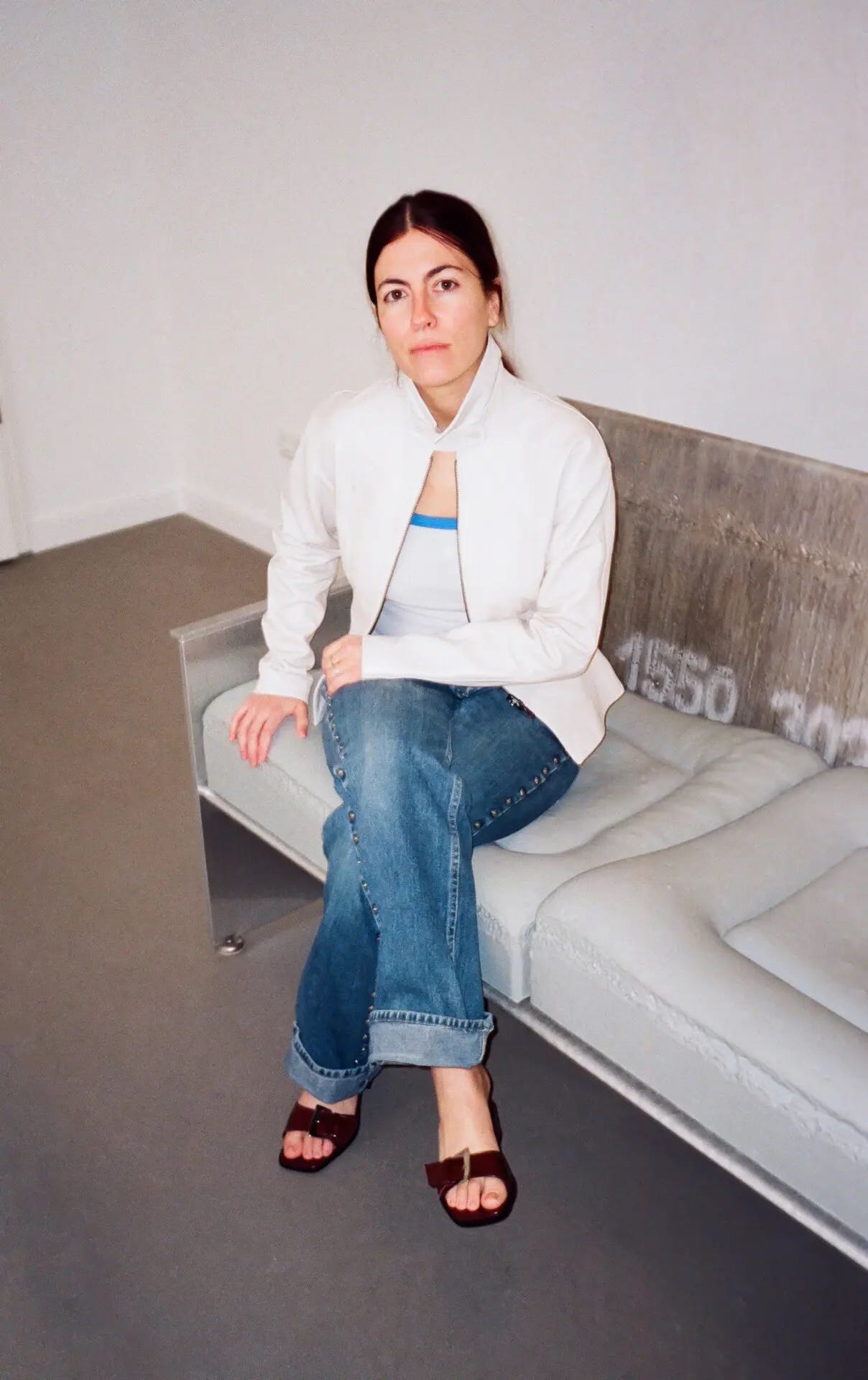
That founding ethos still runs through every element—the casting, the color grading, the captioning. Each drop feels like a diary entry, not a product pitch. This spirit of collaboration extends beyond the clothes themselves—Paloma Wool regularly works with artists not only for campaign visuals, but also for its physical spaces, treating stores as co-created environments rather than static displays. Early collaborators were not influencers but friends, dancers, artists. Clothes were not styled but lived in. Mediterranean light informed the palettes; comfort, not couture, shaped the silhouettes. The result was a visual language that felt at once local and global, tender yet unmistakably intentional.
Paloma Wool operates less like a conventional label and more like a sensibility. Multidisciplinary at its core, it lives somewhere between brand and collective, moodboard and movement. It rejects seasonality in favor of situationality—and that distinction matters. Nearly half of its site visitors are under 35, and they aren’t just buying garments; they’re buying points of view. Paloma Wool offers one grounded in softness and curiosity rather than performance.


From Digital Cult Label to IRL Cult Following
Early on, Instagram served as Paloma Wool’s runway, lookbook, and flagship store. But unlike most DTC upstarts chasing sleek perfection, the brand leaned into an analog, almost amateur aesthetic: grainy film, unfiltered models, shoot locations that felt like real lives rather than set pieces. This "non-design" design earned it 800k followers and a global fanbase without influencer campaigns.
But the real pivot came when the brand began moving beyond the grid—translating its digital intimacy into real-world environments. The “pop-up world tour,” launched in 2019, marked a decisive expansion strategy. From Paris to Seoul, each location was conceived not as a retail point, but as a localized, living expression of the Paloma Wool ethos.
In London, guests received hand-sketched order forms and one-on-one styling sessions with brand insiders. In New York, local artists contributed to visual installations, creating an immersive gallery-meets-market vibe. In Seoul, the line snaked down the block. But the buzz wasn’t about product drops—it was about presence.
Paloma Wool’s spaces offer what digital can’t: tactile connection, embodied community, spontaneous conversation. But these weren’t throwback stores—they were strategically hybrid. Orders placed onsite were shipped to customers’ homes, returns were frictionless, and staff were trained not as salespeople but as hosts. The vibe was communal, not transactional.


The Clothes Are the Story
While much has been made of Paloma Wool’s spatial design, the clothes themselves play an equally narrative role. At each pop-up, they’re not just product—they’re physical extensions of the brand’s worldview. Soft tailoring, sun-bleached colorways, hand-drawn prints: every piece is imbued with context. These aren’t garments meant to impress from a distance—they’re designed to be touched, tried on, seen in natural light.
And crucially, they age well. Paloma Wool’s aesthetic resists overdesign in favor of atmosphere. A shirtdress might double as a canvas for a friend’s sketch; a cropped knit might recall a summer memory more than a runway trend. This material subtlety is what makes the brand feel durable—and why its pieces serve as anchors within each ephemeral space. You don’t leave the pop-up with a shopping bag. You leave with a memory you can wear.


Beyond Aesthetic: Can Intimacy Scale?
For all its softness, Paloma Wool’s strategy is anything but naive. Around 80% of sales still flow through digital. Permanent stores remain rare by design. Pop-ups serve as brand laboratories: testing regional appetite, gathering qualitative insights, fine-tuning UX.
This isn’t just showrooming 2.0. It’s what you might call “community-first commerce,” where emotion and infrastructure go hand in hand.
But a question lingers: Can this model scale without diluting its soul?
So far, the answer seems to be yes. The brand has resisted influencer playbooks and capsule hype. Its spaces still feel lived-in, not manufactured. But the risk of aesthetic fatigue is real. The very mood that made Paloma Wool iconic—lo-fi, artist-adjacent, tender—is now algorithmic shorthand for cool.
Other brands have tried to replicate this hybrid strategy and fallen short—seduced by the aesthetic of community without investing in its substance. Paloma Wool’s edge lies in its restraint. It grows slowly. It listens. It doesn’t over-design the moment.
And maybe that’s the real innovation here: in an industry obsessed with scale, Paloma Wool reminds us that retail can still feel personal. That softness, done right, can be a strategy.
Toward a New Retail Playbook
Zooming out, Paloma Wool offers more than a clever tour strategy—it’s presenting a retail alternative for the post-DTC era. Where the 2010s model favored rapid scaling, uniform branding, and the eventual flagship, Paloma Wool has embraced something looser, lighter, and arguably more aligned with Gen Z’s mood: modular intimacy.
This isn’t about conquering markets—it’s about co-creating presence. Each pop-up becomes a proof point in a new growth model that privileges resonance over reach. No permanent fixtures, no formulaic rollouts. Instead: local immersion, flexible logistics, and experiences that prioritize emotional stickiness.
For emerging brands, the lesson isn’t “do a pop-up.” It’s: build a world first, then let it travel. Invite your audience to step inside—not just to transact, but to linger, to feel, to belong.
Business Lessons Beyond the Buzz
Paloma Wool’s success underscores a broader shift in how fashion brands can scale sustainably—economically and emotionally.
Build Brand First, Product Second
Before releasing wide collections, Paloma Wool built a world—anchored in visual storytelling, slow-fashion values, and a consistent tone. Every product exists within that world, not outside it.
Use Pop-Ups As Strategic Leverage
Pop-ups here aren’t cash grabs or tourist traps; they are brand rituals. Limited, ephemeral, and deeply site-specific, they create urgency and resonance. They also act as market research tools and test beds for future flagship concepts.
Prioritize Meaningful Physical Interactions
In an age of hyper-digital fatigue, IRL moments matter more. Paloma Wool didn’t open a store—it created experiences that feel like stepping into its Instagram feed, only warmer, slower, and more personal.
Sustainability Isn’t a Trend—It’s a Standard
Local manufacturing, low-impact dyes, and an intentional release calendar aren’t just good ethics—they’re good business. Conscious consumers are watching, and this level of operational integrity builds trust.
The Future Is Blended
Paloma Wool isn’t alone in reimagining retail this way. Brands like Gentle Monster and Tamburins have shown how immersive design and experiential touchpoints can transform commerce into culture. But Paloma Wool’s success is perhaps more instructive because it’s so understated. There are no megawatt campaigns, no celebrity capsules—just consistency, community, and care.
As the brand enters its second decade, the question becomes how to protect its ethos while expanding. Will it add permanent stores? Will it enter new categories like home or fragrance? Or will it continue to roam—keeping things light, mobile, and just a little bit magical?
Whatever the next move, one thing is clear: Paloma Wool isn’t scaling a brand. It’s scaling a feeling. And that might be the most powerful growth strategy of all.