
Goldwin
If Arc’teryx feels a little too mainstream these days, look no further.

In recent years, the rise of gorpcore has blurred the line between summit-ready gear and street-savvy style. No longer confined to outdoor enthusiasts, performance apparel has fully infiltrated the fashion mainstream—thanks in part to the global boom in running culture, the aestheticization of physical activity, and the quiet flex of looking technically dressed while casually doing normal activities.
Your hiking jacket or running gear is now expected to be as Instagrammable as your morning cortado—and just as loaded with cultural meaning.
Some brands are actively shaping this movement (Satisfy). Others are inserting themselves into the narrative via buzzy collaborations (On x Post Archive Faction). A few, like Arc’teryx, have leveraged their technical DNA into fashion clout.
But there’s one name that deserves far more attention—especially in Europe—than it currently gets: Goldwin. The Japanese outdoor and sportswear label may fly under the radar, but its precision, innovation-first mindset, and deep alpine roots position it as a true insider’s brand in the age of high-performance hype.
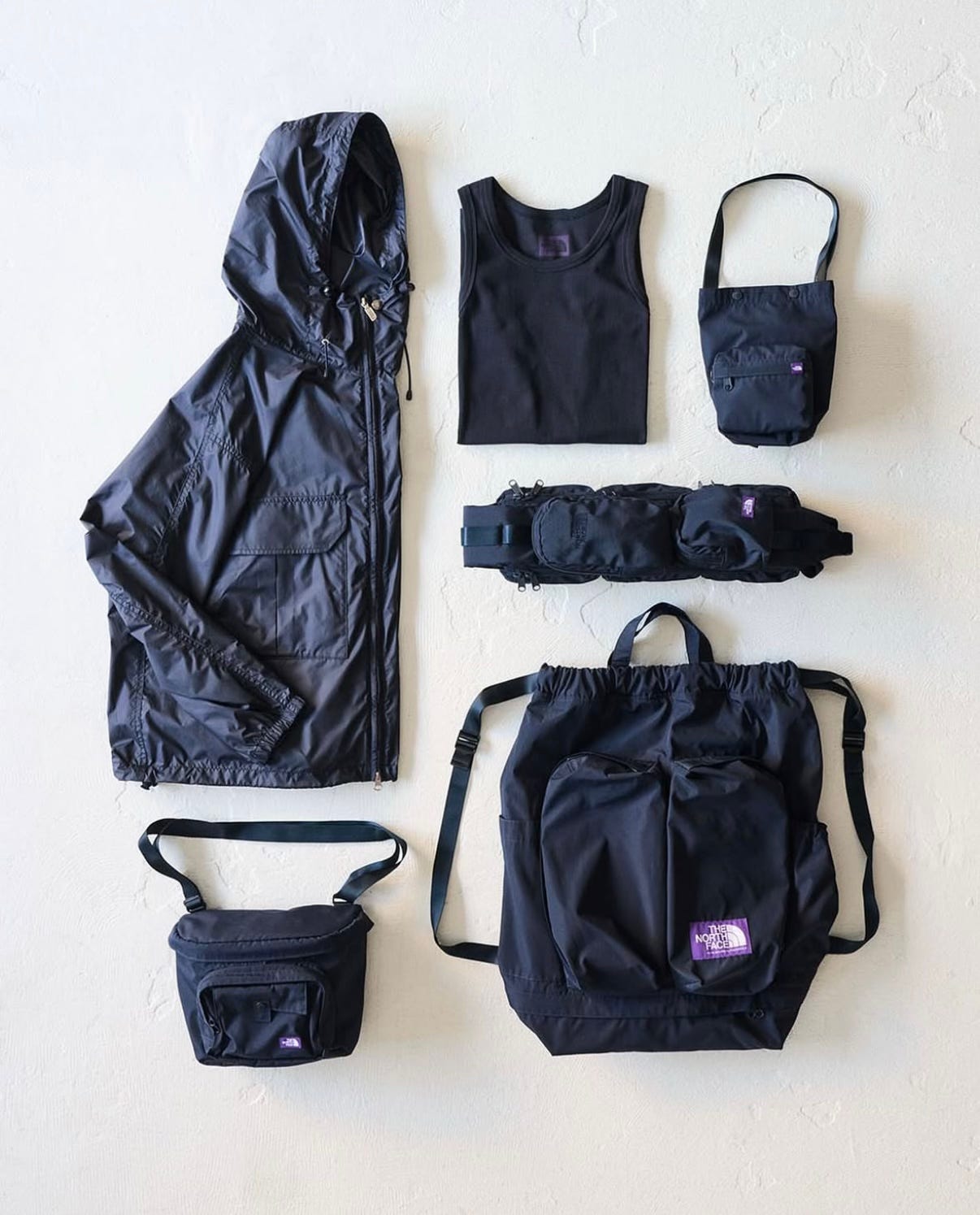
Notably, Goldwin is also the quiet engine behind several cult sub-labels, including the revered The North Face Purple Label, produced exclusively in Japan via its long-standing partnership with Nanamica.
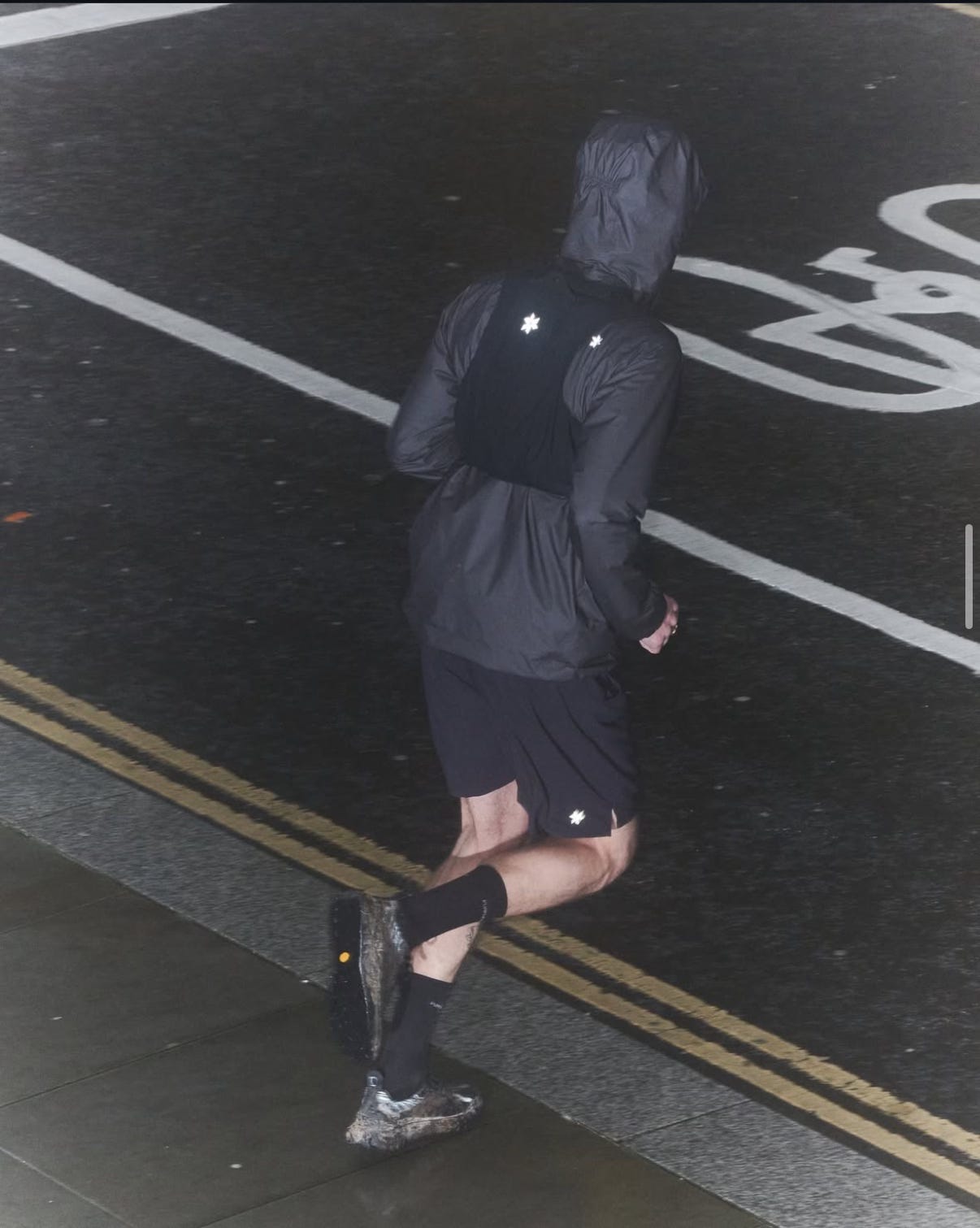
Backstory: From Knits to Credibility
Goldwin’s roots stretch back to 1951 in Toyama, Japan, where it began as a knitwear company. By the 1960s, the brand had pivoted toward ski apparel, outfitting Olympic teams and pioneering technical fabrics designed to perform in the harshest alpine conditions. Over the following decades, Goldwin quietly built a reputation for excellence in outdoor gear, becoming a cornerstone of Japan’s performance apparel landscape.
But Goldwin hasn’t just outfitted Olympians—it’s also shaped some of Japan’s most quietly influential fashion lines. Goldwin holds the exclusive license for The North Face in Japan, operating a vertically integrated machine that includes design, production, and distribution. Within that framework, it helped launch The North Face Purple Label with Nanamica—a fashion-forward, Japan-only line that blends technical mountainwear with clean, urban design. It’s the definition of cult status—zipped up and unmistakably Goldwin: understated, high-function, and quietly covetable.
Despite this pedigree, Goldwin only launched its own lifestyle-focused label in 2016—entering the fashion arena with a staggering amount of credibility already baked in. Its minimalist logo—evoking ski tracks and mountain peaks—isn’t instantly recognizable, and that’s by design. Goldwin doesn’t chase the spotlight. It earns it slowly, through consistency, quality, and a kind of quiet luxury that speaks to those who know.
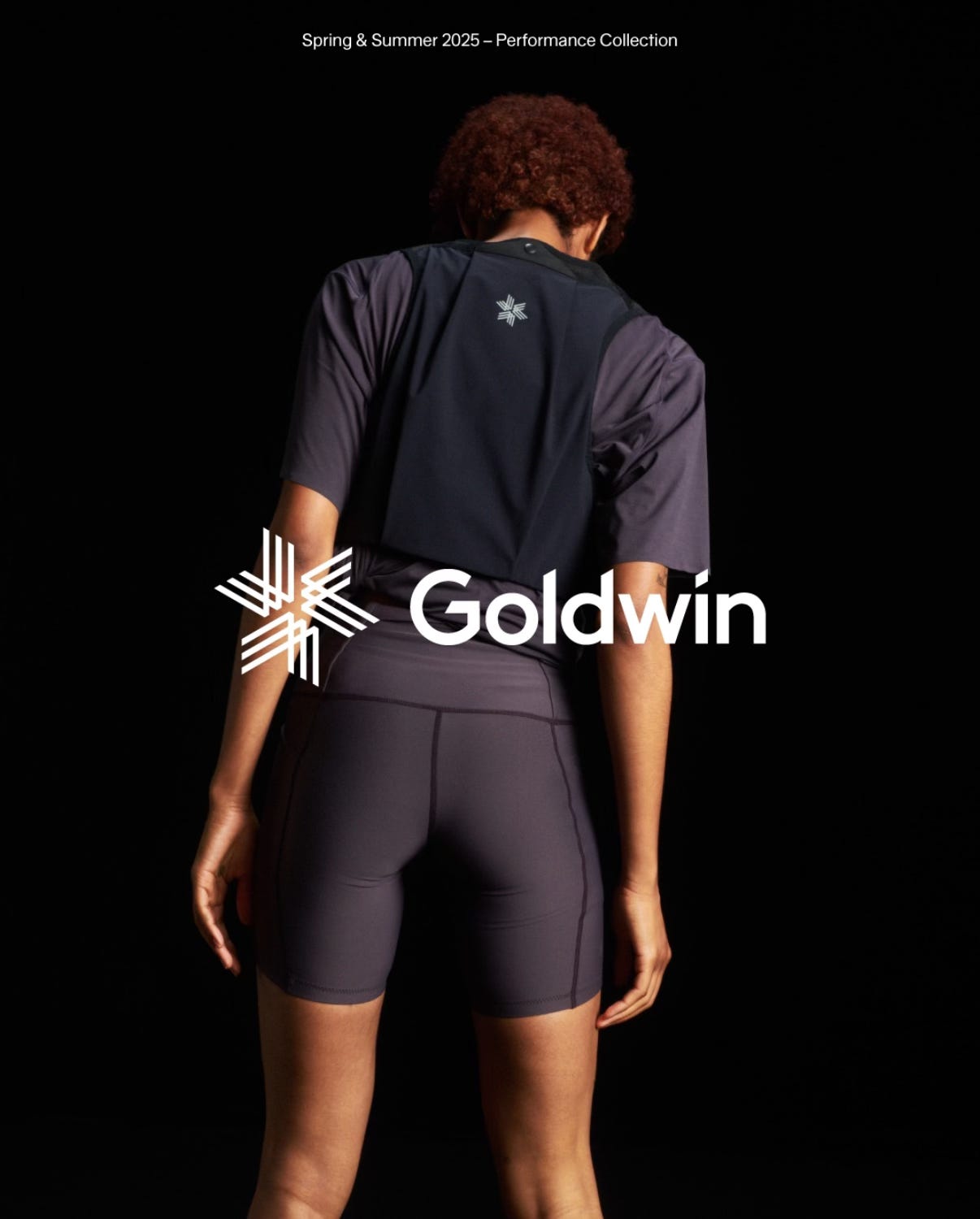
Design: Innovation Without the Noise
Goldwin’s aesthetic draws heavily from Japanese minimalism and utilitarian refinement. Think: streamlined silhouettes, ergonomic cuts, hidden vents, subtle branding.
Crucially, Goldwin pairs design restraint with aggressive innovation. The brand collaborates with textile leaders to create new materials and enhance performance. Examples include a Polartec fleece infused with conductive yarn to reduce static buildup and an ultralight PrimaLoft insulation that’s warmer yet more packable. In 2017, Goldwin established its own Tech Lab in Toyama to support this relentless R&D mission. The results? Pieces using GORE-TEX Pro, Pertex Equilibrium, Kodenshi down, and more—all executed with sleek discretion. Basically, it’s fashion with a scientific backbone.
Where others shout “GORE-TEX!” in all caps, Goldwin just integrates it—and lets the product speak. The result is outerwear that feels smart rather than showy, with innovation that's embedded rather than broadcast.
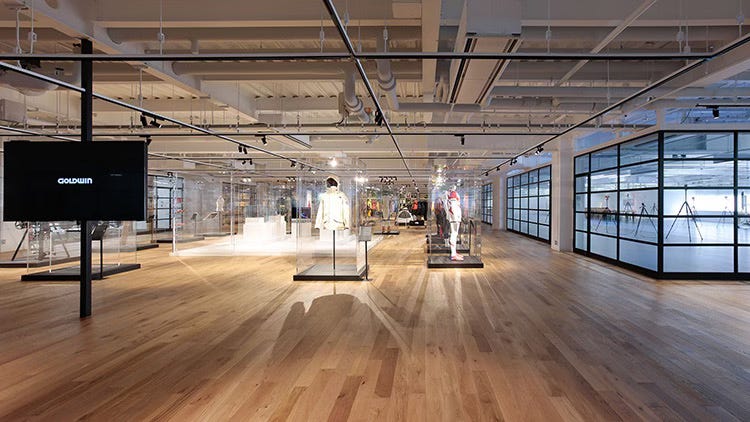
(I still love Satisfy’s MothTech—but Goldwin’s science-driven approach feels like the grown-up in the room.)
Cultural Relevance: The Under-the-Radar Cool Factor
Goldwin keeps things quiet. No TikTok shower tests. No maximalist graphics. No marketing stunts engineered for hype. For many outside niche outdoor or fashion circles, Goldwin barely registers—which is precisely what makes it so compelling. This is a brand that thrives under the radar, known only by those who really know.
But this isn't just about modesty—it's a deliberate cultural strategy. In Japan, Goldwin is a legend. Its Harajuku flagship draws a mix of techwear obsessives, design editors, and well-informed tourists. It’s the fleece your favorite stylist posts with no tag. The jacket your in-the-know friend wears on a weekend hike to signal taste without saying a word.
That strategy extends beyond Japan. In Europe, Goldwin only opened its first flagship (in Munich) in late 2020. It remains niche, operating through boutique stockists and word-of-mouth. Yet that scarcity enhances its mystique. When someone in Paris or London asks, “Hey, what jacket is that?” the unfamiliar logo sparks curiosity instead of recognition. That moment of pause—that brief lapse before name-dropping—is exactly where Goldwin wants to live.
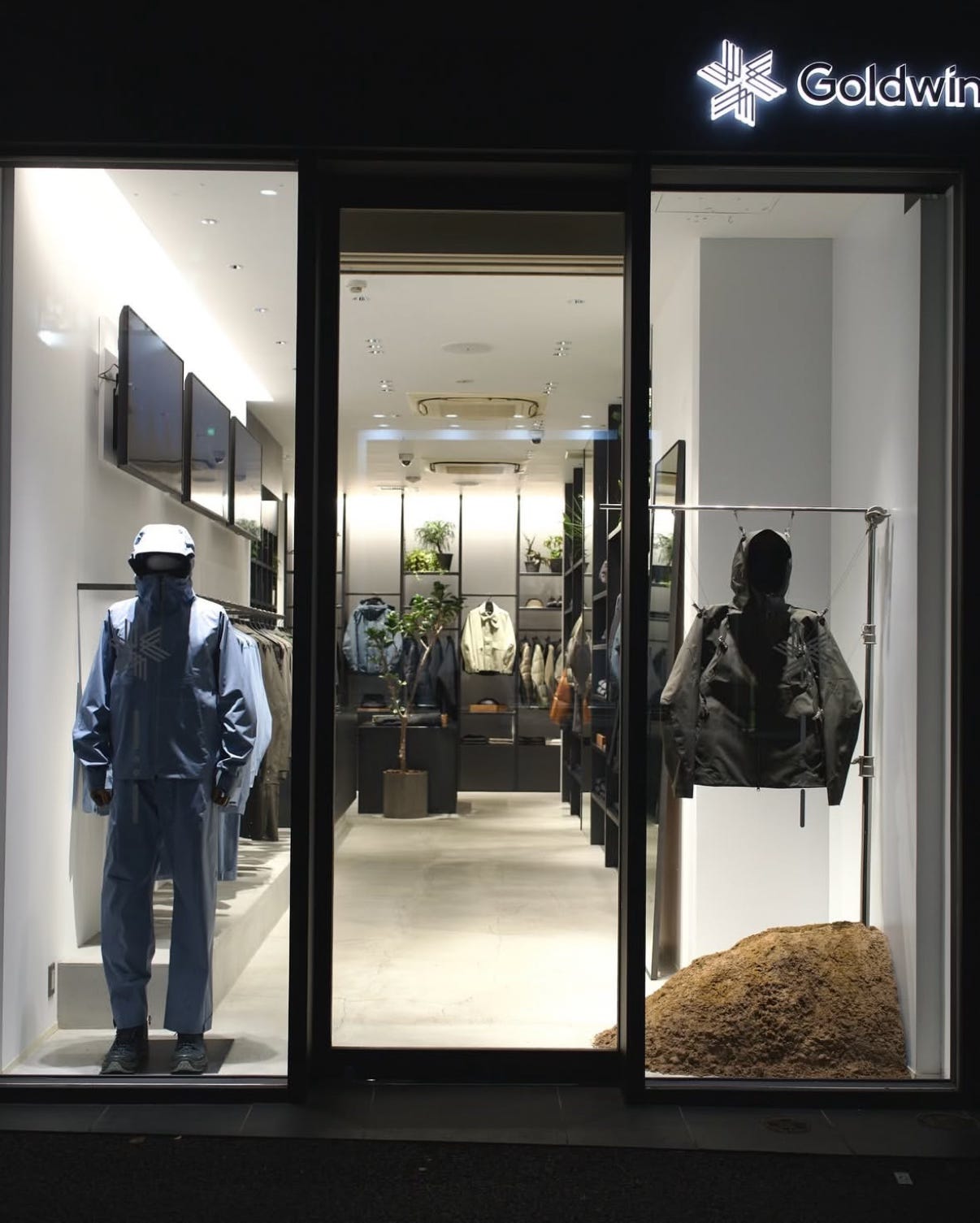
Core Collections: Quiet Innovation in Practice
Goldwin's design philosophy truly comes to life in its core seasonal collections, which operate as quiet showcases of the brand's technical innovation and aesthetic discipline. Goldwin channels its energy into creating performance gear that works seamlessly across mountain and metropolitan environments.
Take the Fall/Winter 2023 "Flow" collection, for example. It offered pieces like a high-end 3L GORE-TEX ski jacket with laser-cut ventilation in the collar to reduce goggle fogging, Aerogel-insulated pockets—a NASA-grade material—to keep electronics warm, and internal attachment tabs for seamless layering. Every feature was intentional, even if invisible at first glance. This detail-oriented approach defines Goldwin's seasonal output. The pieces may look minimalist, but they’re the result of obsessive engineering.
Other collections tap into Goldwin's Olympic heritage and trail running expertise. Lightweight insulation, stretch-infused pants, ergonomic patterning—nothing is decorative, everything is considered. The common thread? Understated engineering and versatility over seasonal hype.

Experiments That Matter
Goldwin’s recent experimental ventures offer a compelling glimpse into the brand’s next chapter—quietly radical, design-forward, and deeply rooted in innovation.
To understand Goldwin's momentum, look to its recent projects. In 2022, it launched Goldwin 0, an experimental sub-line aimed at creating "functional clothing beyond categories." Directed by Nur Abbas (ex-Nike ACG and founder of Gnuhr), Goldwin 0 leans into nature, science, and innovation. Collections have drawn on mathematical patterns, and bleeding-edge textiles. It's an R&D lab in fashion form—with all the quiet sophistication of the main line, but even more conceptual daring.
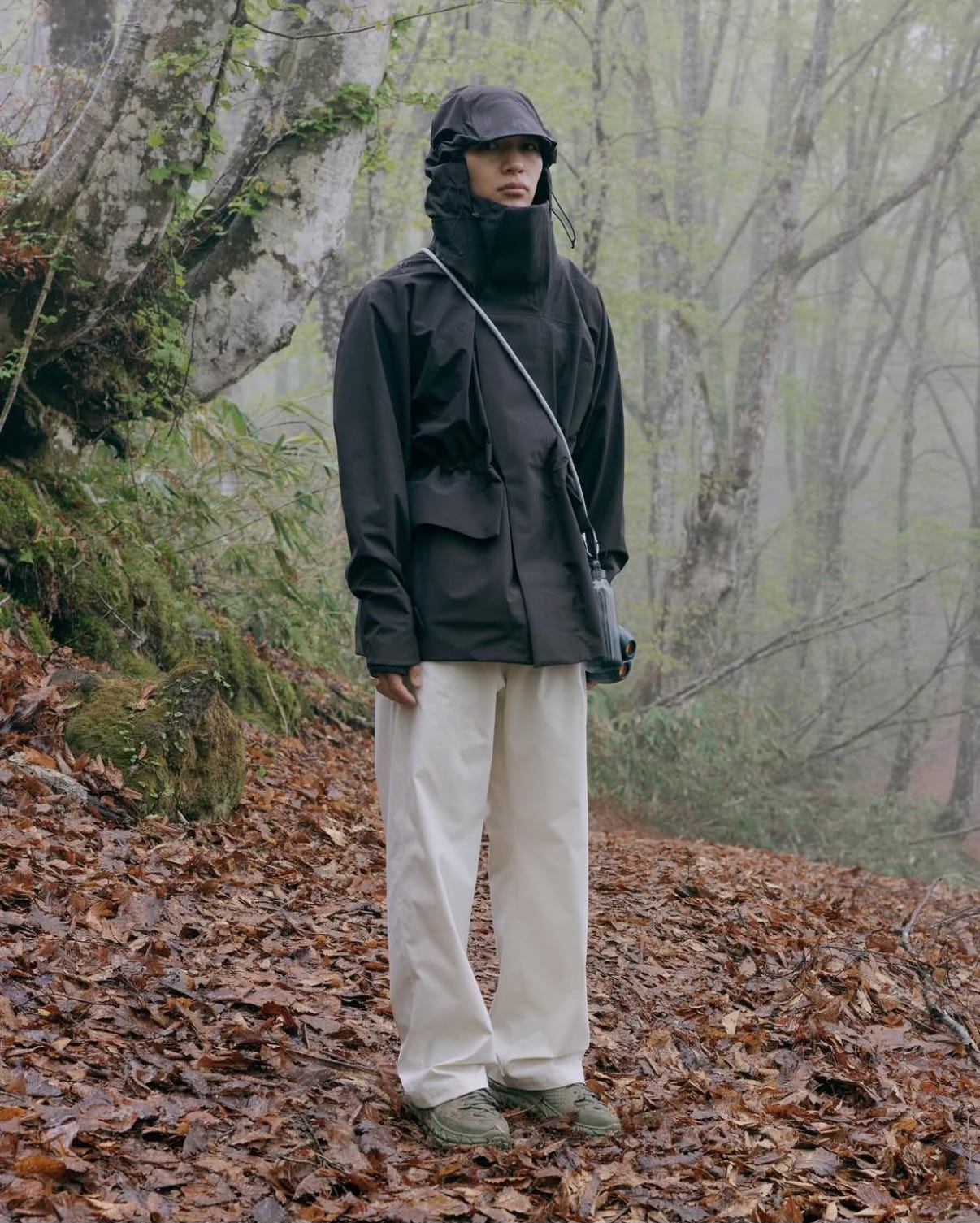
For earlier collections, Goldwin’s Natsuko Koike and Taro Motoda, assembled a design team that includes Julia Rodowicz (formerly of Balenciaga) and Jean-Luc Ambridge, a Goldsmiths alum with a background in 3D design software. Their collaborative approach draws inspiration from organic forms, mathematical structures, and material science. One standout innovation is the use of Spiber’s Brewed Protein™, a bio-fabricated textile that’s both high-performance and biodegradable. “The Brewed Protein™ material can easily game change the fashion industry,” Motoda notes—a bold claim, but one that aligns with Goldwin 0’s sustainability-first ethos.
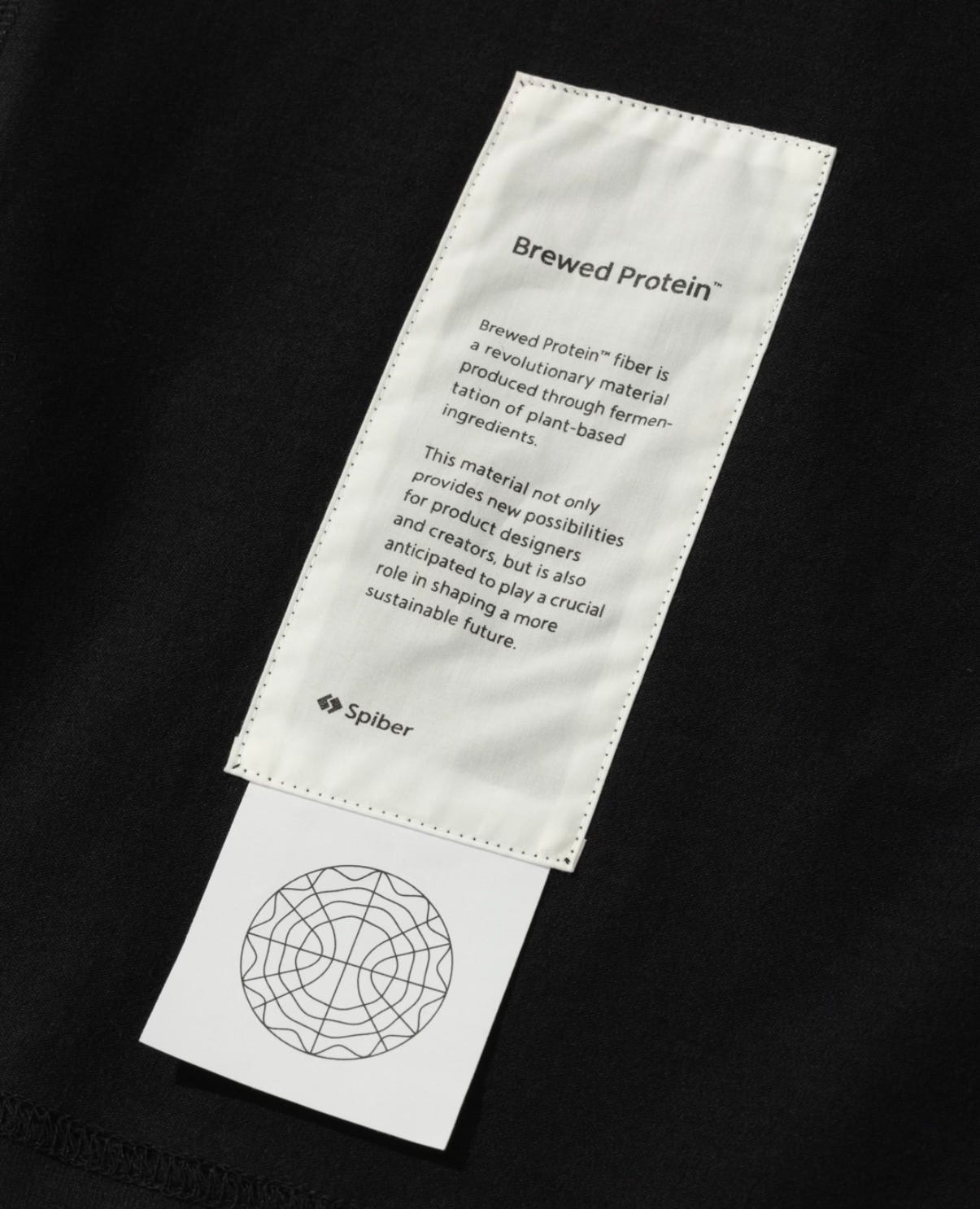
This momentum carried into a 2024 collaboration with J.L-A.L, the London-based label led by Ambridge. The result was a concise four-piece capsule of 3L GORE-TEX PRO shell jackets, articulated pants, and a minimalist crewneck—topped off with a Spiber Brewed Protein™ jacket sold exclusively via the J.L-A.L webstore. The collection demonstrated how Goldwin nurtures its creative network to push design boundaries without sacrificing technical integrity.
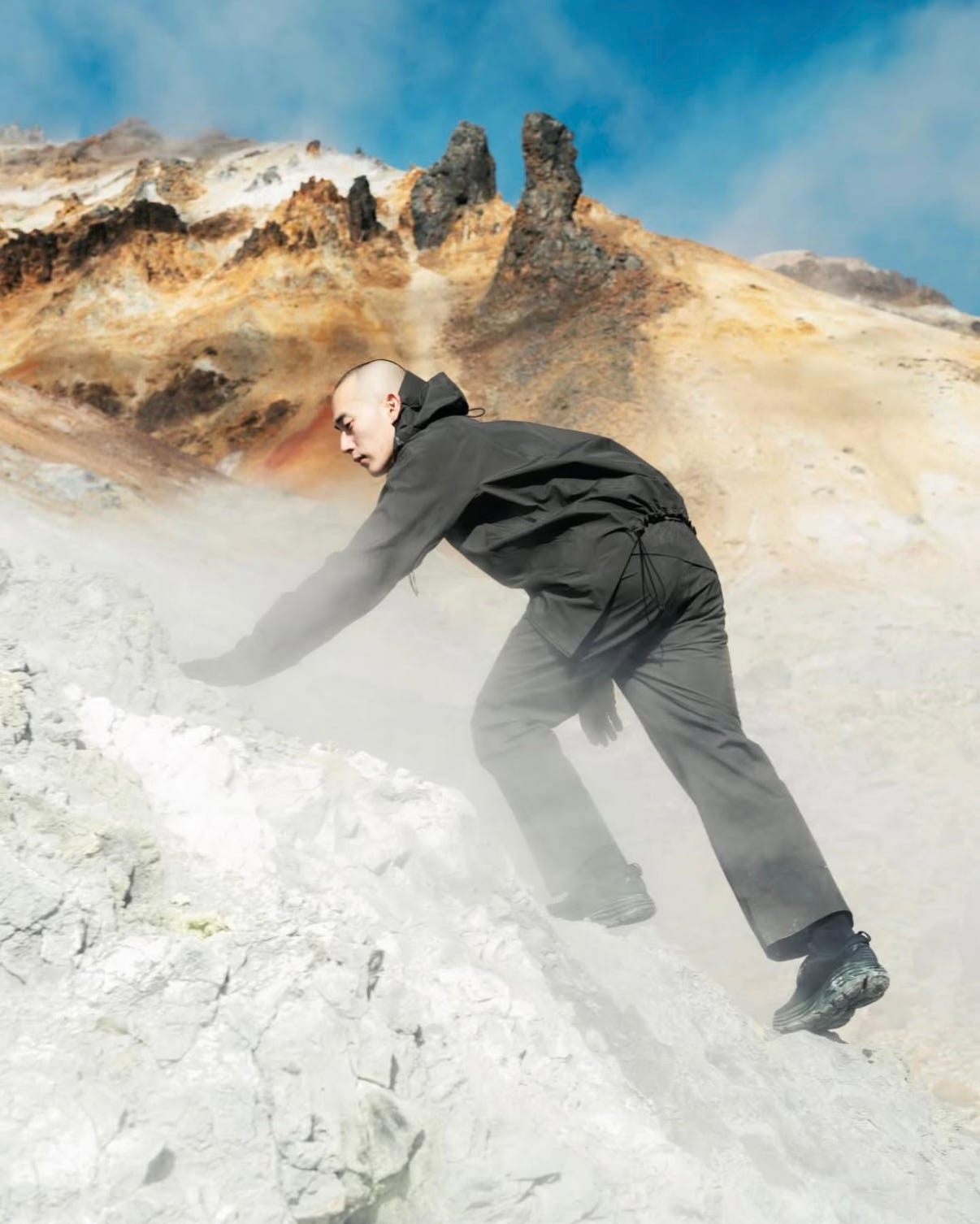
Other collaborations have reinforced this approach. Goldwin x OAMC (2024) fused Luke Meier’s utilitarian elegance with Goldwin’s technical mastery—yielding outerwear in custom three-layer technical cotton, marked by tactile finishes and muted palettes. Meanwhile, a co-branded line with Maison Kitsuné brought Parisian charm to alpine function, resulting in Kodenshi-down jackets loaded with performance features and distributed in true Goldwin fashion: selectively and locally.
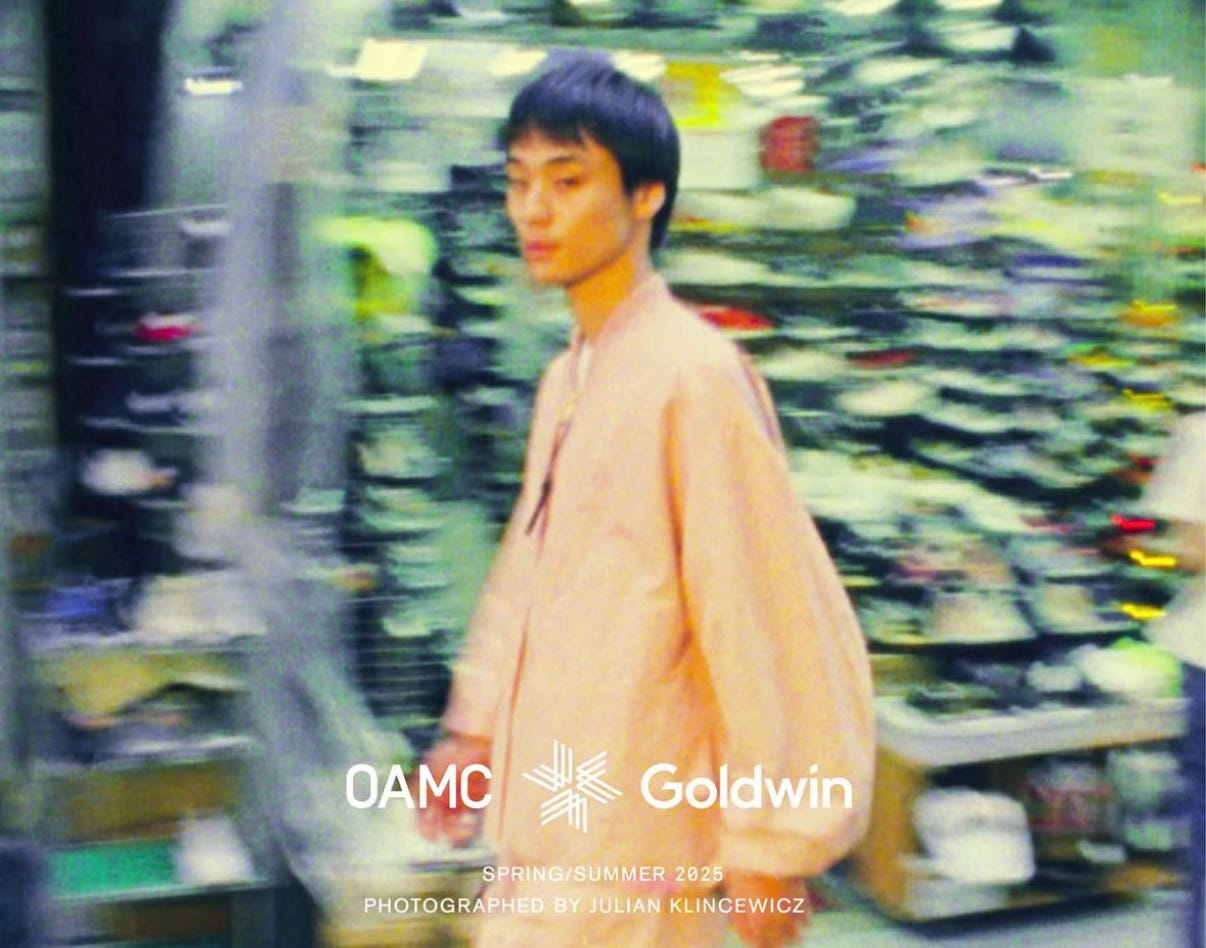
Across these projects, one throughline emerges: experimentation without ego. Even Goldwin’s campaign imagery speaks this language. The Fall/Winter 2022 campaign, titled “Rationality of Layering,” was art-directed by Motoda himself. Rather than hype or spectacle, it offered a meditative take on clothing systems and their interaction with the body and environment—a visual manifesto for Goldwin’s quiet ambition.
The Road Ahead: Subtle Expansion, Strategic Visibility
Goldwin has the ingredients to become a global cult favorite: heritage, textile innovation, sustainability, and a razor-sharp aesthetic.
But the growth strategy needs to be as disciplined as the garments.
Retail expansion? Yes—but only in cities where the right context exists. Flagships should feel like sanctuaries, not billboards.
Collaborations? Strategic and rare. Imagine a materials-forward drop with upcoming Japanese labels like Rainmaker—or even Nur Abbas’s own brand, Gnuhr—one that elevates both names through craft, not clout.
Storytelling? There’s an archive here worthy of a documentary series: Olympic uniforms, astronaut gear, early biofabric tests. Bring that history forward through editorial films, exhibitions, or a Substack series.
But above all: no trend-chasing. Goldwin isn’t built for hype cycles. In a world that increasingly values substance over noise, mystique is luxury.
Goldwin doesn’t need to top the charts. It just needs to keep making the kind of critically acclaimed gear that real aficionados love.