
A.PRESSE
How a Japanese Label Quietly Reinvented Americana Through Craft.

Last week during Paris Men’s Fashion Week, one of my personal highlights wasn’t a runway show or afterparty. It was the A.PRESSE pop-up at THE NEXT DOOR, a concept store near Canal St. Martin. In typical A.PRESSE fashion, the brand didn’t make a loud statement—it quietly transformed a small corner of the shop into something entirely its own.
It was only the second time I’d seen the pieces in person—the first being at their Tokyo flagship—and once again, I was struck by how different they feel off-screen. A wool trouser that holds its structure without feeling stiff (sadly, just a little bit out of my budget at €1.3k). A leather jacket that wears like it’s already yours. Even the shirting carries a kind of quiet precision that resists easy capture. A.PRESSE just does something with you.


Not Reproducing. Reframing.
In a post-"quiet luxury" era saturated with beige basics and algorithm-optimized minimalism, A.PRESSE offers something rarer: depth. Not just in fabric or fit, but in cultural intent. While many Japanese brands have long mined American heritage, few reframe it as decisively as A.PRESSE. Visvim mythologizes Americana. Kapital remixes it. Auralee deconstructs it. A.PRESSE? It translates it.
This translation isn’t superficial. It involves a deep interrogation of archetypes—military and workwear staples that carry decades of design evolution. The '1st Type' denim jacket, for instance, originated in the 1930s as Levi's earliest trucker silhouette, with a boxy fit, pleated front, and a single chest pocket. The M-51 field trouser, issued to U.S. soldiers during the Korean War, was built for durability with cargo pockets and a wide leg. Even the MA-1 flight jacket—a nylon staple born from 1950s U.S. Air Force design—has become an international shorthand for utilitarian cool. A.PRESSE doesn’t just borrow these references. It dismantles and rebuilds them. A 1st Type denim jacket is reworked with softer lines and a lighter weight. M-51 military pants lose their bulk but retain their bearing. The military shirt-jacket gains side vents and subtle tapering, transforming stiffness into ease. These aren’t reproductions—they’re reimaginings. Each piece is distilled to its functional core, then rebuilt through a Japanese lens of craftsmanship, proportion, and restraint. It’s not just about the look. It’s about emotional calibration. Like a conversation between Tokyo and upstate New York, the clothes feel both familiar and quietly estranged. It's not nostalgia. It's resonance.


Designing Without Designing
That sensibility traces back to founder Kazuma Shigematsu, who didn’t come up through the usual creative-director track. Before launching A.PRESSE in 2021—his first time overseeing a brand end-to-end—he worked in sales and production, helping execute and distribute labels like Daiwa Pier39 and Weekend to top-tier retailers in Japan and abroad. Not sketching but streamlining. His approach—“designing without designing”—isn’t branding fluff. It’s a factory-bred instinct for editorial rigor.
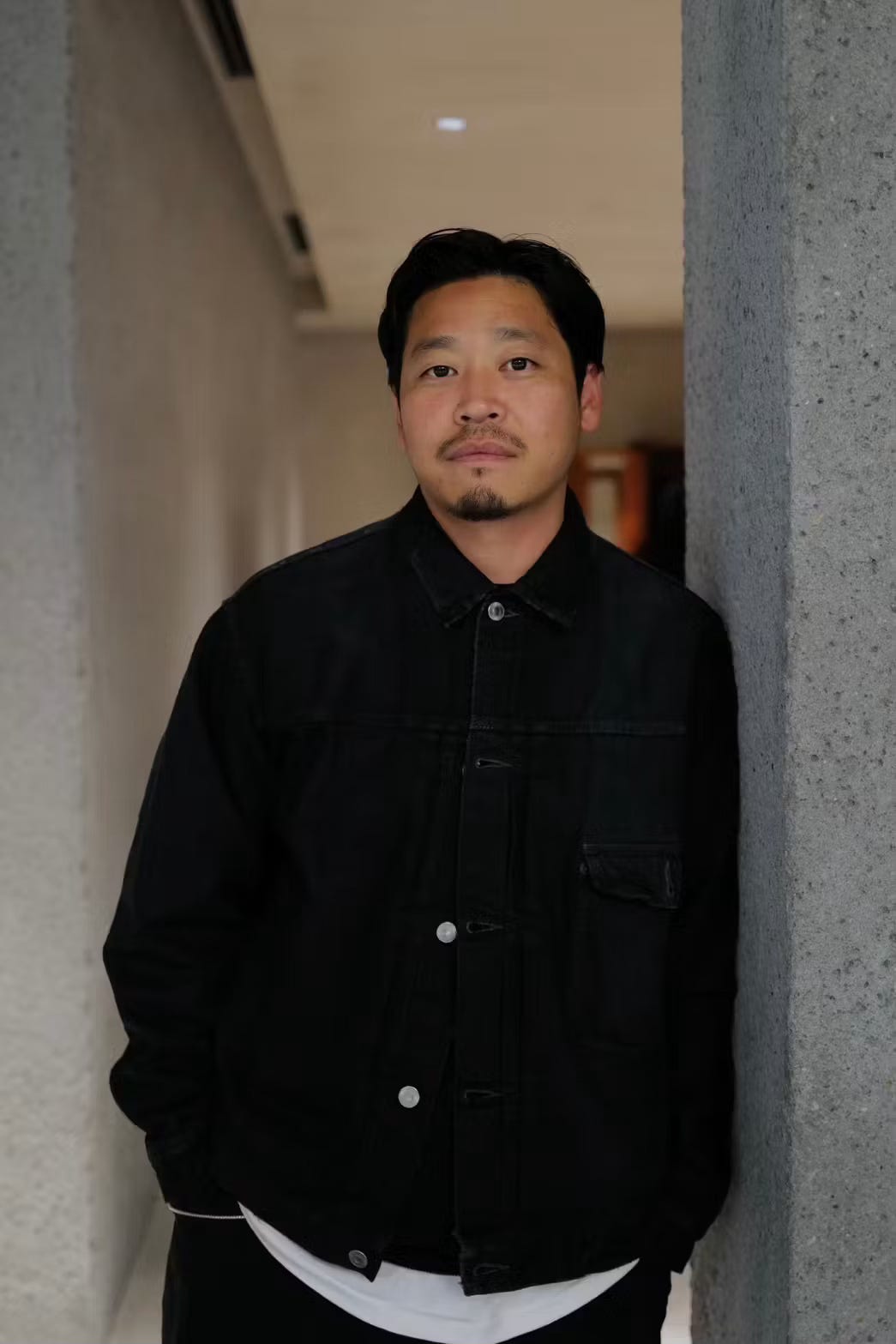
Most designers begin with a moodboard, a theme, a seasonal narrative. Shigematsu begins with a garment. A pair of archival fatigue pants. A thrifted 1950s shirt-jacket. A deadstock denim jacket. Each is dissected, redrafted, and rebalanced. Adjustments are precise: a slimmer collar roll, a gentler taper, a reduction in pocket bulk. The aim is not reinvention for its own sake, but quiet resonance with contemporary life.
Internally, A.PRESSE operates more like an editorial studio than a traditional atelier. Shigematsu doesn’t work in isolation—his team includes two other designers, and every piece goes through a collaborative process of pitching, challenging, and refining. Ideas are debated, garments are revised, and nothing leaves the studio unless it’s been through multiple rounds of critique. Each drop—never marketed as a “collection”—is treated like a final draft: edited for clarity, proportion, and tone.


Tactility as Language
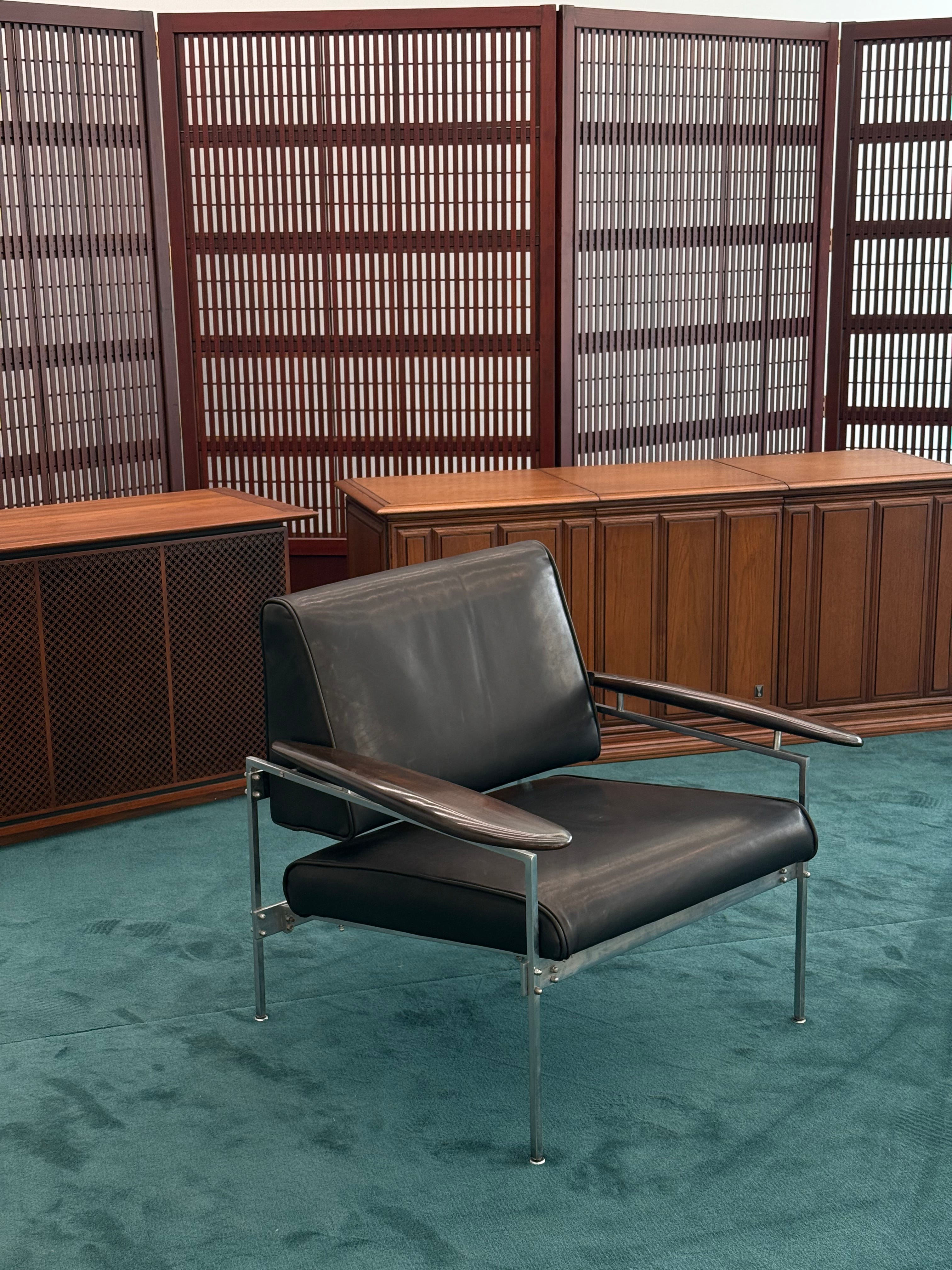
That same editorial clarity defines the physical brand. A.PRESSE Tokyo flagship has no signage, no display windows. Just a subdued doorbell and basement entry—almost monastic in tone. Inside: concrete walls, handmade hangers, mid-century chairs, and a gentle hush that feels more like a soundproof studio than a retail floor. There are no product tags dangling. No campaign images on the walls. The space, like the brand, is edited for intent.
Here, tactility does the talking. Fabrics aren't just selected—they’re tuned. Cotton blends are softened with silk to feel broken-in without losing structure. Spanish leather is tanned to glove-grade suppleness. Horsehide belts come with matte buckles that whisper instead of clang. These are not surface luxuries; they’re engineering choices. The goal isn’t sensory overload—it’s sensory compression. To make you notice the friction of a seam, the temper of leather, the drape of a hem. You don’t just try things on. You read them, with your hands.
It felt similar at the pop-up in Paris. The atmosphere in the dedicated corner was immediately calming and catered to experiencing the fabric—more like stepping into a private fitting salon than browsing a rack. Even in a shared retail environment, the brand created a pause.
Even the pacing of the store encourages a slower metabolism. Lighting is golden-hour warm. Music filters through vintage JBLs at barely-there volume. The scent is neutral, not branded. Nothing here is staged to sell. It’s curated to listen. Each architectural detail—each hanger, fixture, and wall texture—reinforces the same intent: to mute external noise so that touch, weight, and texture can take the lead. The store isn’t a gallery. It’s a sensorial reset.


A Post-Attention Blueprint
All of which raises a broader question: what does A.PRESSE signal about the future of brand-building? In an age of perpetual product drops and algorithmic dopamine loops, its refusal to scale fast or shout loud feels radical. There’s no celebrity seeding. No viral hooks. No campaigns engineered for Instagram. Just disciplined restraint and cultural clarity.
It’s a mode of operating that feels deeply countercultural—especially as other brands chase virality and seasonal buzz. A.PRESSE plays a different game. It sells out without hype. It builds without noise. The brand is not anti-fashion, but post-attention.
That clarity also means scarcity. A.PRESSE produces in extremely limited quantities—sometimes just a handful of units per style. Once a drop goes live, many pieces are gone within hours. I’ve experienced it firsthand: during a recent trip to Japan, I tried tracking down a pair of trousers I’d seen online, only to find they had already sold out across all Tokyo stockists. This isn’t artificial scarcity. It’s the byproduct of the brand’s insistence on control and precision at every stage of the process.
In Japan, that may be enough. But its growing presence—from LA to Paris—suggests a broader appetite for this kind of cultivated slowness. For the kind of product that rewards proximity, not just pixel-perfect image. For brands that invest in longevity over momentum.
The takeaway isn’t that A.PRESSE is ahead of the curve. It’s that they’re ignoring the curve entirely. Not chasing hype cycles, but building toward permanence—one perfect trouser, one mood-lit showroom, one quiet conviction at a time.